What Happens to My Deposit If the Cabinet Shop Goes Under?
It’s the question almost nobody asks out loud, and it’s the right one. You’re about to hand a significant amount of money to a company you met a few weeks ago, for something that doesn’t exist yet, and won’t exist for another two or three months. So here is the honest answer, starting with how it works at our shop.
Before any money moves, there’s a signed contract. It binds us to you and you to us — homeowner, builder, or designer, whoever is signing. Once that contract is executed and the deposit comes in, the money goes into a separate account. Not our operations account. It sits there while our design and engineering team draws your job, and it doesn’t get touched to buy material until you have signed and approved the shop drawings. That approval is the gate. Nothing is ordered before it.
After you approve, every piece of material for your job is purchased on a purchase order written against your project. Every sheet, every slab of hardware, every box. That’s not a courtesy — it’s how the shop runs — but it has a useful side effect: your material is identifiable and traceable to your job, not pooled into some anonymous warehouse. If anyone ever needed to sort out what belonged to whom, it’s already sorted.
The shops that actually disappear
We should be direct about the risk, because it’s real, and we’ve watched it happen more than once.
The shops that vanish are small. Two thousand square feet, a handful of people, leased or financed equipment. That owner can lock the door on a Friday, take deposits with him, and reopen under a different name in a different unit across town. There is very little holding him in place. The equipment isn’t his. The space isn’t his. The name on the door is a formality.
That’s the profile. It’s almost never the shop with a plant full of paid-off machinery.
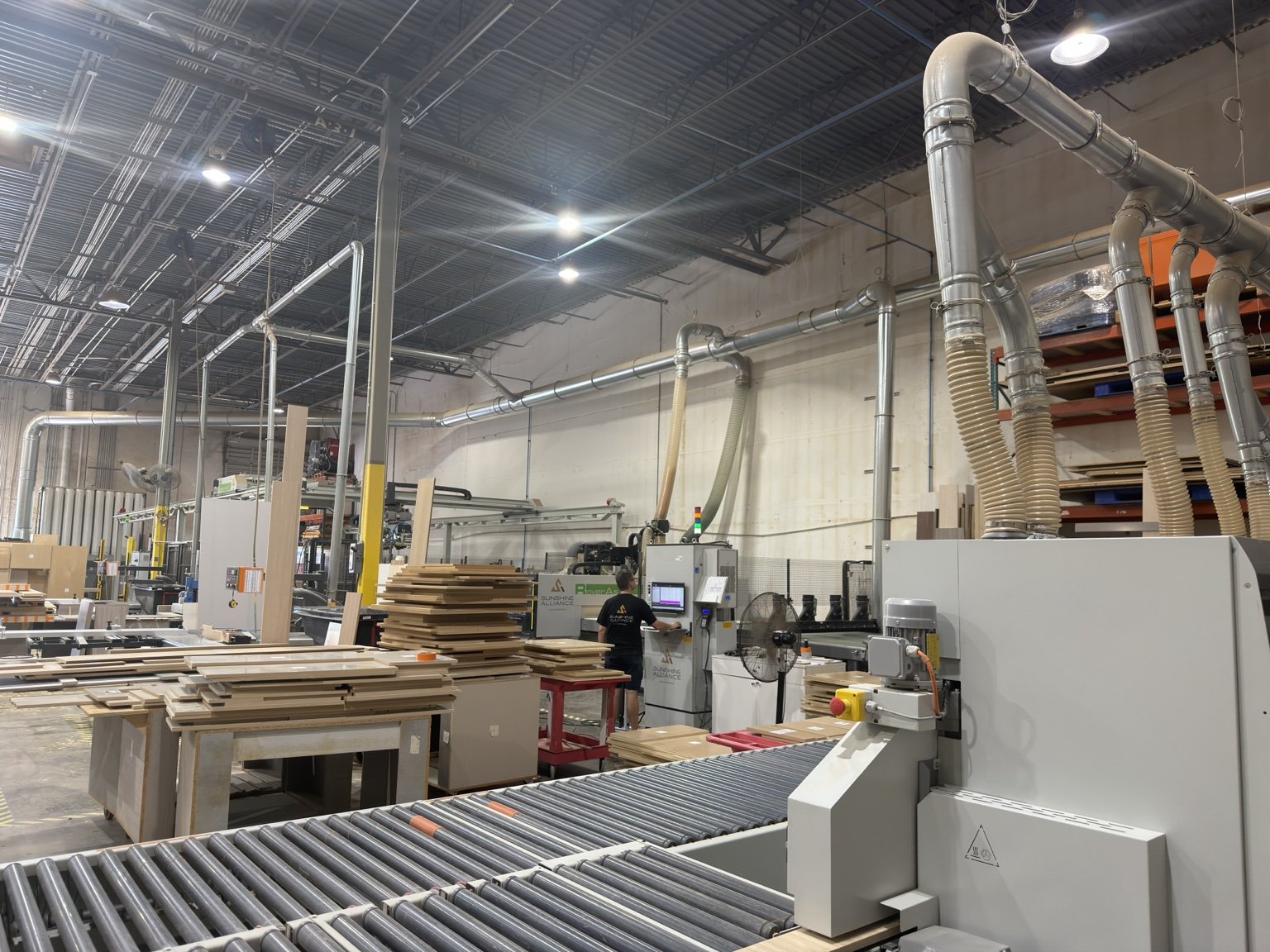
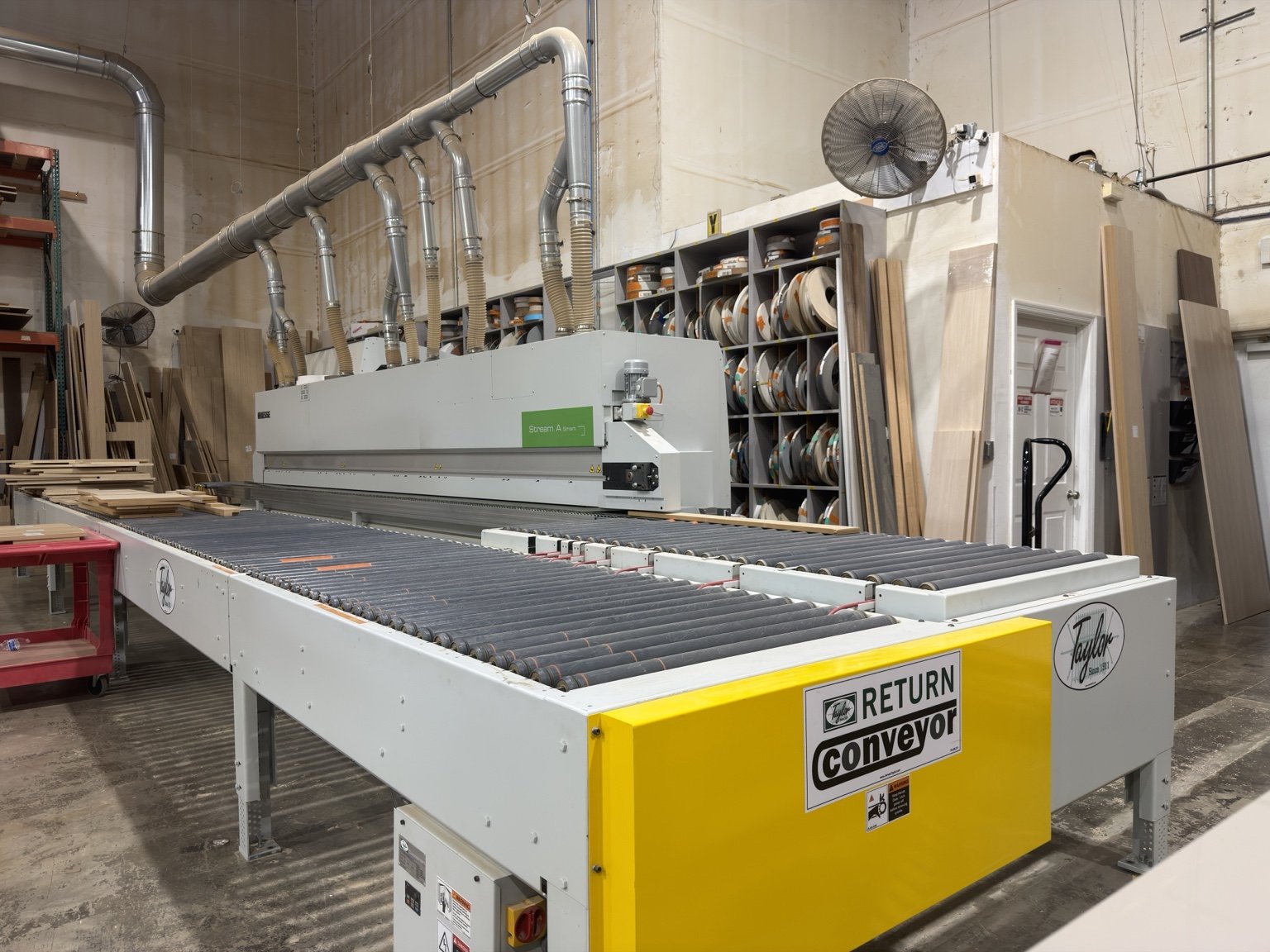
Every machine on our floor is paid off in full — the CNC, the edge bander, the panel storage, the trucks, all of it. That’s not a boast about the balance sheet; it’s a statement about physics and consequences. You cannot move a factory overnight. You cannot quietly reopen one under a new name. The scale that makes us slower to start than a two-man shop is the same scale that makes us impossible to walk away from.
The record, since 2002
We’ve been building since 2002. In more than two decades we’ve come through several economic cycles, including COVID — months where nothing could be produced and the rent, the equipment, and a full crew still had to be carried. We came out the other side. We have never handed a job over to someone else and we have never stopped production halfway through a project.
One thing we say plainly in the contract: once your project has started, cancellation isn’t an option. That sounds one-sided until you understand why. We’re full custom. Nothing we buy for your job is stock, and nothing on your job can be resold to the next client, because it was cut for your walls and your ceiling heights. The commitment runs in both directions — you can’t walk away from it, and neither can we. That’s the trade. A shop that lets you cancel freely is usually a shop that isn’t building anything specific to you in the first place.
What to ask any shop — including us
Here’s the tell, and it costs you nothing.
Ask to walk the shop floor. Not the showroom. The floor. If you’re building a $7 million house and you walk into a shop with three or four people working in it, that’s a small operation carrying a very large responsibility. That may be fine. But you should know it before you sign, not after.
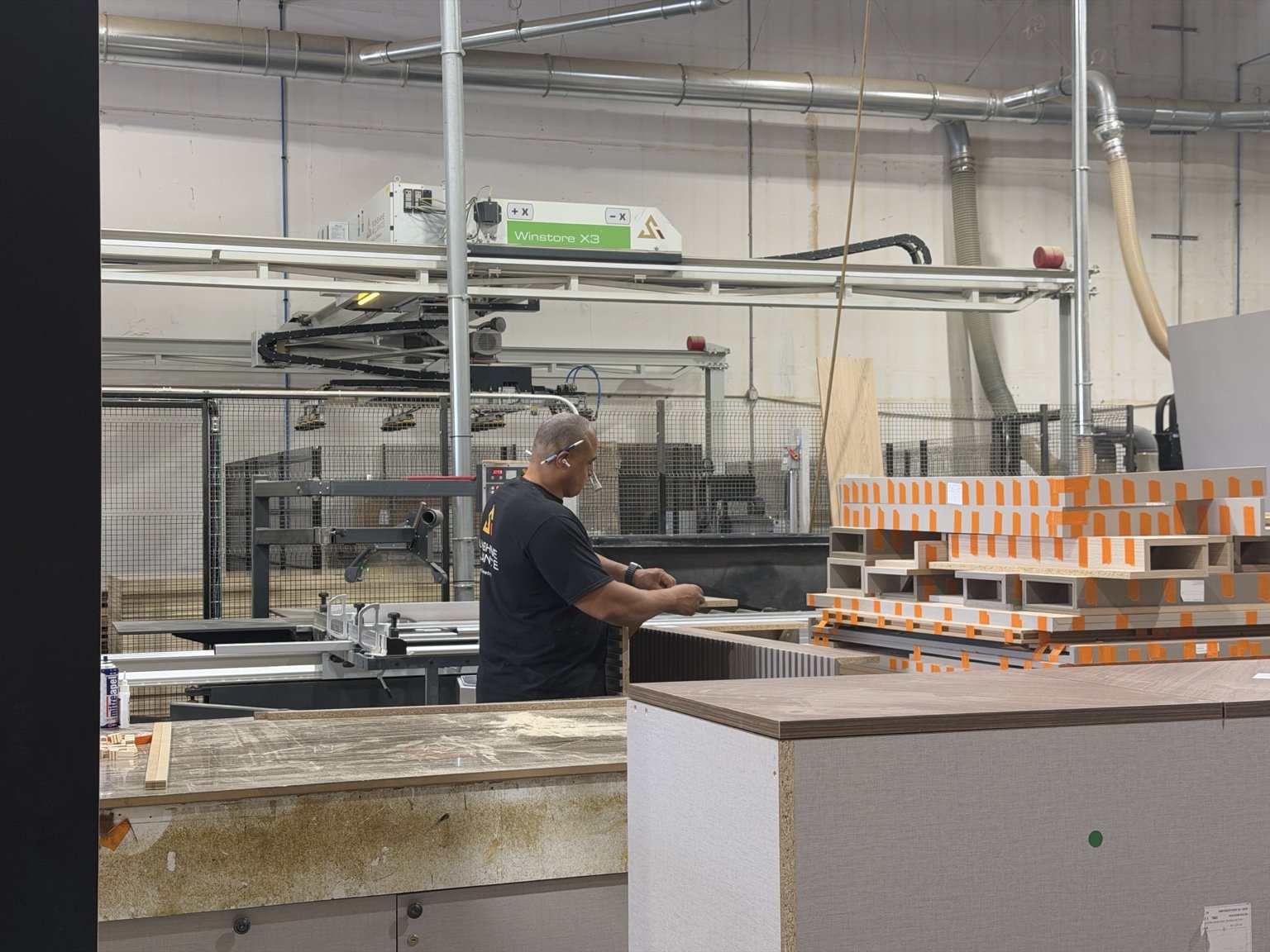
See the machines. See how many people are actually working on a Tuesday afternoon. Look at whether the place looks like a business that intends to be there in five years.
Then ask for references on your scope. Not their best project — a project the same size and complexity as yours. Any shop can show you one beautiful kitchen. Ask who they’ve done a whole house for, and call that person.
If you walk a floor, see the machinery and the crew, and talk to a client with a job like yours, and you’re still uneasy — trust that. That’s information.
For designers, architects, and builders
If you’re the one specifying the shop, the exposure isn’t only financial — it’s your name. You brought this shop to your client. If it stalls or disappears, the client doesn’t remember the cabinet company; they remember who recommended it.
Which is why the scope-matched reference matters more for you than for anyone. You’re not asking whether they can build a nice cabinet. You’re asking whether they can carry a project of this size to the end, through a long schedule and a slow pay cycle, without stalling. The shops that fail rarely fail at craft. They fail at capacity and endurance.
Ask to bring your client to the floor. A shop that’s genuinely established will want you there. Ours does.
Where this lands
We draw it, we engineer it, we build it, we finish it, and we install it — all in one place. Everything we make, we make ourselves, and we stand behind all of it. That’s not a slogan about quality; in this context it’s a statement about accountability. There’s no third party to point at when something goes wrong, and there’s no factory in another state or another country holding your money and your schedule.
Clients will soon be able to walk our 24,000 square foot plant in Deerfield Beach and see all of it — the machines, the crew, the jobs on the floor. Until then, the invitation stands at our current plant, and it’s an open one.
If you’re weighing a custom kitchen cabinet project and you want to see where the work actually happens before you commit a dollar to it, come stand in it.


 Google
  Facebook
  Trustindex