Who Installs Your Custom Cabinets in Boca Raton — Our Crew, or a Subcontractor?
When someone hires a cabinet shop, they usually ask about the wood, the finish, and the price. The question almost nobody thinks to ask is the one that decides how the last two weeks of the project actually go: who is going to be in your house installing the cabinets?
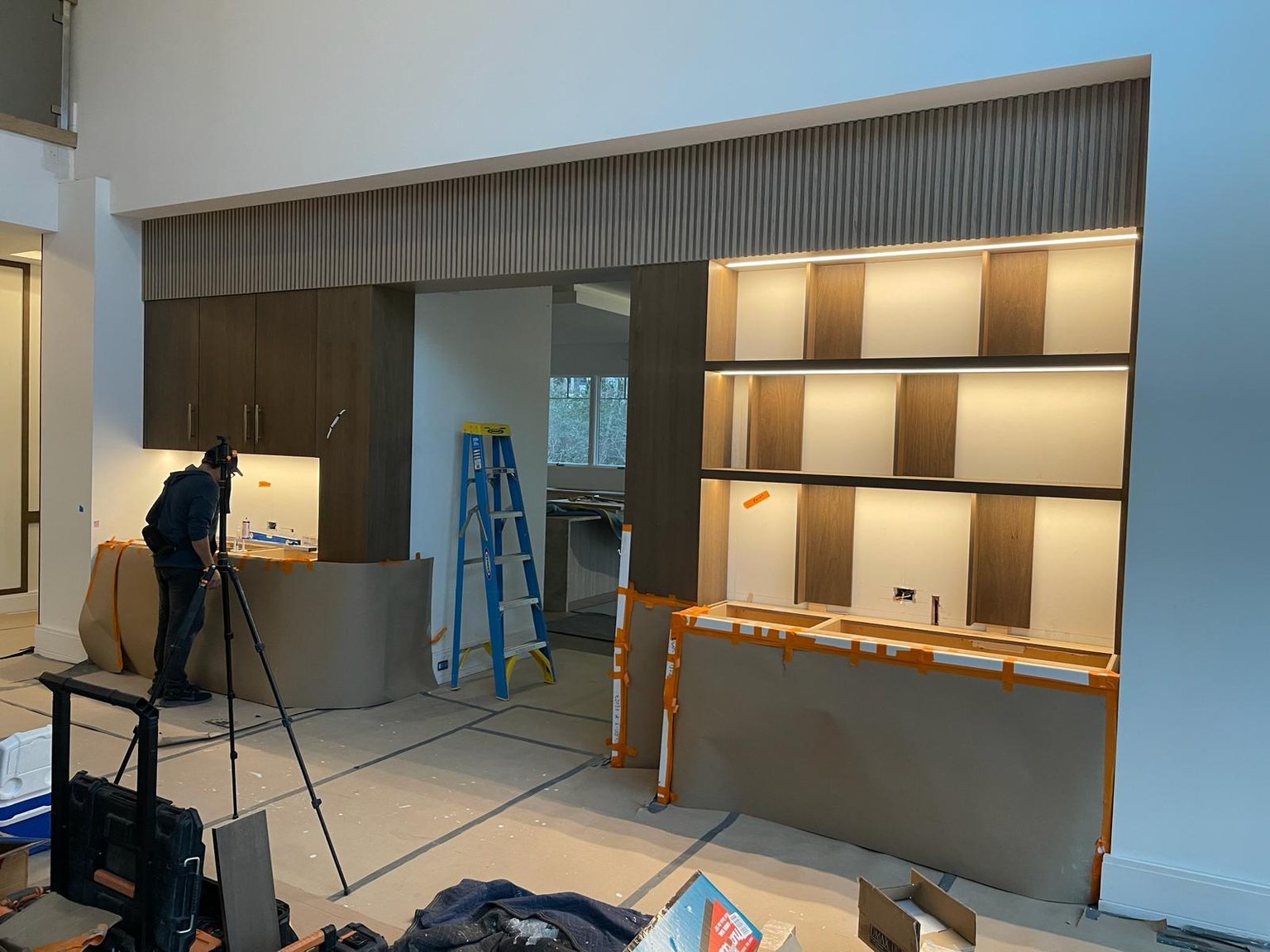
At Sunshine Alliance, the answer is simple. Everyone who shows up at your home is a full-time employee of ours. We don’t subcontract installation to third-party crews. We do it that way on purpose — it’s how we control the scheduling, the quality, and the standard of finish our clients expect. An install is where all the careful work in the shop either lands right or falls apart, and we’re not willing to hand that last step to someone we don’t employ.
Why we stopped subcontracting
We learned this the hard way. For years we used subcontracted installers, and the recurring problem was reliability. A sub would promise to be on site Monday at eight in the morning, and by eleven we’d be getting a call from the builder or the homeowner asking where the crew was. More than once the answer was that the sub had quietly decided to finish another job first, or simply didn’t show.
The moment that ended it for good came about four years ago. We were doing a large install out of state — a home in the Hamptons for a Boca designer and homeowner who’d hired us to come all the way up to New York. Midway through, the subcontractor panicked and walked off the job. So we moved our own people: we flew eight of our guys up and sent two vans on a weekend’s notice to continue the work and finish it. That was the tale that told us we would never subcontract installation again. Since then we’ve spent the last four years building our own installation team.
What the install actually looks like
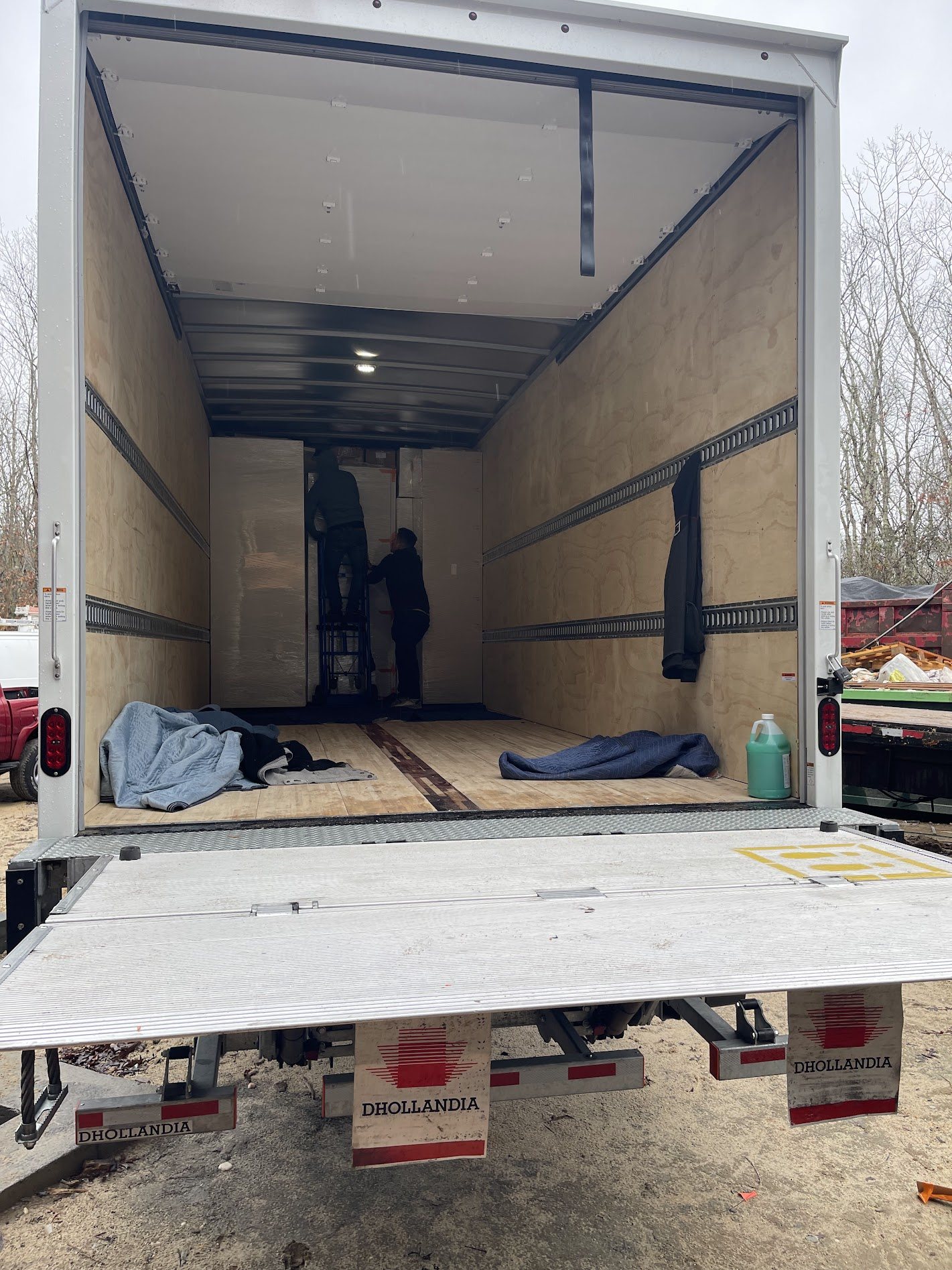
Today we have 24 installers in-house. How many land on your job depends on its size. We like to deliver a day or two ahead so the house is prepped, everything is on site, and every part and piece is accounted for before the crew arrives. A single kitchen gets one crew. A full spec-home build-out — kitchen, multiple bathrooms, closets, built-ins — gets eight to ten of our people on site.
Because the crew is ours, the whole thing stays coordinated from the shop floor to your house. Our custom cabinetry is drawn, engineered, and built in our own plant about ten minutes from the Boca showroom, and the same company that built it installs it.
The part clients don’t see: real-time fixes
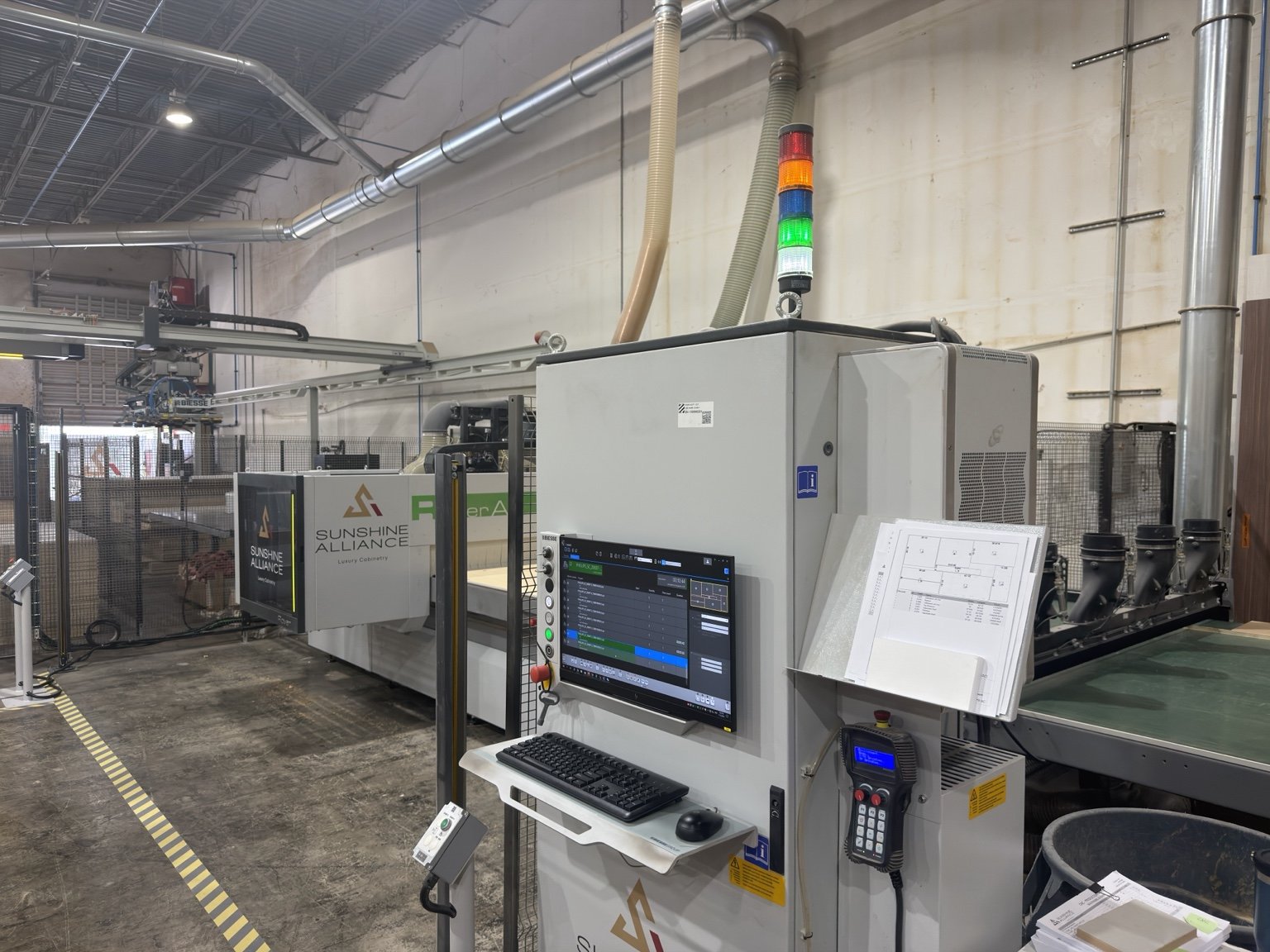
Owning the crew changed something we didn’t fully expect — it made us faster. Our installers talk directly to our factory floor. If a piece is missing, or something arrives damaged, or a part needs to be remade, the installer calls the shop and it happens live. We’re not finding out three days later when someone walks the job. We hear about it the moment it happens, and the remake starts that day. Our turnaround on a correction is far quicker than it ever was with a subcontractor in the middle.
That control hasn’t added the overhead people assume it would. Because we run the process end to end, we finish jobs faster than a subcontracted crew would, and the corrections move faster too.
Why we get called in to finish other people’s jobs
We get brought in to finish another shop’s work more often than you’d think, and it happens one of two ways. Either the contractor has already fired the other company over major project delays, or the shop simply took on far more than it had the capacity and the manpower to actually deliver.
When we walk in, the first thing we do is assess whether there’s enough material on site to complete the project. If there is, we go in on labor only. But that isn’t normally the case.
Typically the smaller shop bid the project so low, and underestimated what it would really take to see it through to the end, that there’s no material left to finish with. At that point the homeowner, the contractor, or the designer is paying twice — for something that could have been avoided by hiring a reputable company from the start.
That’s the part the low bid never tells you. It isn’t what you saved at signing. It’s the second set of cabinets.
What designers, architects, and builders care about
Designers, architects, and builders all want the same thing from a cabinet partner: reliability, and one team to deal with. It makes their job easier when the cabinetry, the schedule, and the crew all sit under one roof instead of being split between a shop and whatever subcontractor the shop happened to book.
There’s a quieter benefit, too. When we hit a problem, we fix it fast enough that it never reaches the designer or the client. That Hamptons job is the clearest example — the failure was the subcontractor’s, but because we could prep a crew and get it on site within two days, the homeowner and designer never had to live through the crisis. That’s the kind of reliability that earns repeat work.
The local advantage
Roughly 80 to 90 percent of our work is in Boca Raton, and we’re active across South Florida from Jupiter and West Palm Beach down to Miami. That local clustering is part of the value. If a builder or designer moves a timeline, or a job gets delayed for reasons outside our scope and then has to be made up, we can put a supplemental crew on the site the same week to expedite our end of the cabinetry and millwork. A shop that depends on scattered subcontractors can’t flex like that. Because our scheduling is done in-house, we can.
The question to ask before you sign
When you’re comparing cabinet shops in Boca, ask who actually installs the cabinets — their own full-time crew, or a subcontractor. Ask who you call if the crew doesn’t show up Monday morning. The shop that employs its installers is the shop that can stand behind the whole project, start to finish. Everything we make, we make ourselves — and we install it ourselves, too.


 Google
  Facebook
  Trustindex