
How Do You Make Appliances Disappear Into Custom Cabinetry?
Custom Cabinetry · South Florida · Since 2002
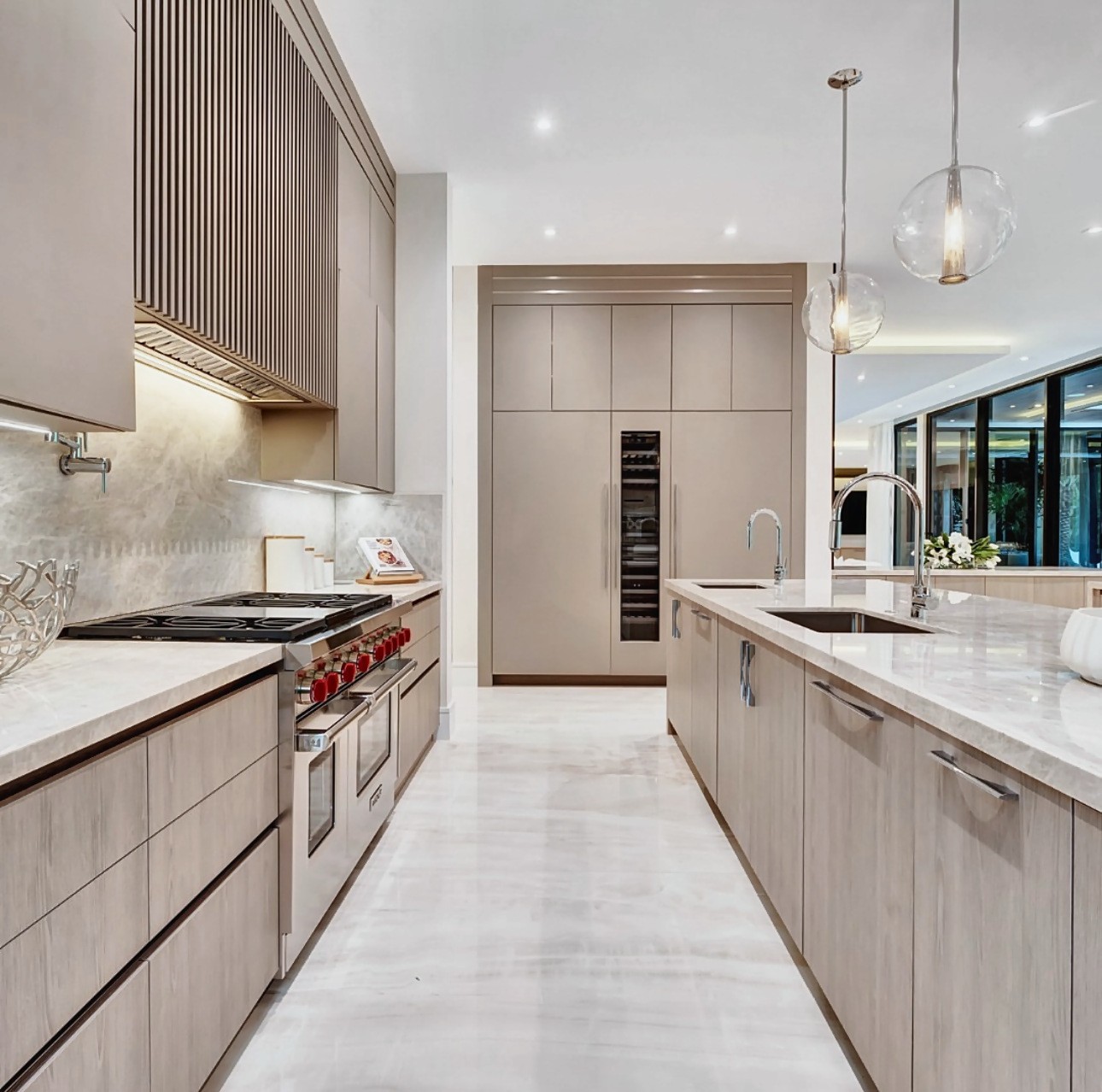
When you walk into a luxury kitchen and a refrigerator, hood, or dishwasher seems to vanish into the cabinetry — reading as one continuous run of millwork rather than appliances with cabinet doors stuck on them — you’re seeing the result of one decision made months before the cabinets were built.
That decision is the appliance spec.
The Direct Answer
Panel-ready and integrated appliances only disappear when three things align: the appliance model is spec’d for flush integration, the cabinet maker builds to the appliance manufacturer’s tolerances (not his own), and the gaps between the appliance panel and surrounding cabinetry match the gaps between your cabinet doors. On high-end appliances, that gap is one eighth of an inch. On less expensive models, it can open up to half an inch, and suddenly your “integrated” hood or fridge looks like an afterthought.
The cabinet maker cannot fix a poorly spec’d appliance. But a sharp cabinet maker catches it before the cabinets are drawn and gives you the choice to swap it out or live with the bigger reveal.
The Story: When the Wrong Model Goes In
We’ve flagged this a handful of times over the years. A homeowner or designer falls in love with a refrigerator that looks great in the showroom, but when we pull the specs — depth, door thickness, hinge clearance, the whole picture — we see it won’t sit flush in the cabinetry they’ve designed. The gap between the panel and the fridge frame is too loose. Once the cabinets are built to the correct specs, the appliance looks like it’s floating.
At that point, there’s no cabinet fix. The homeowner’s choice is simple: swap the refrigerator for a model that integrates tighter, or accept the bigger reveal and let the kitchen read differently than planned.
The Mechanism: Why Flush-Build Matters
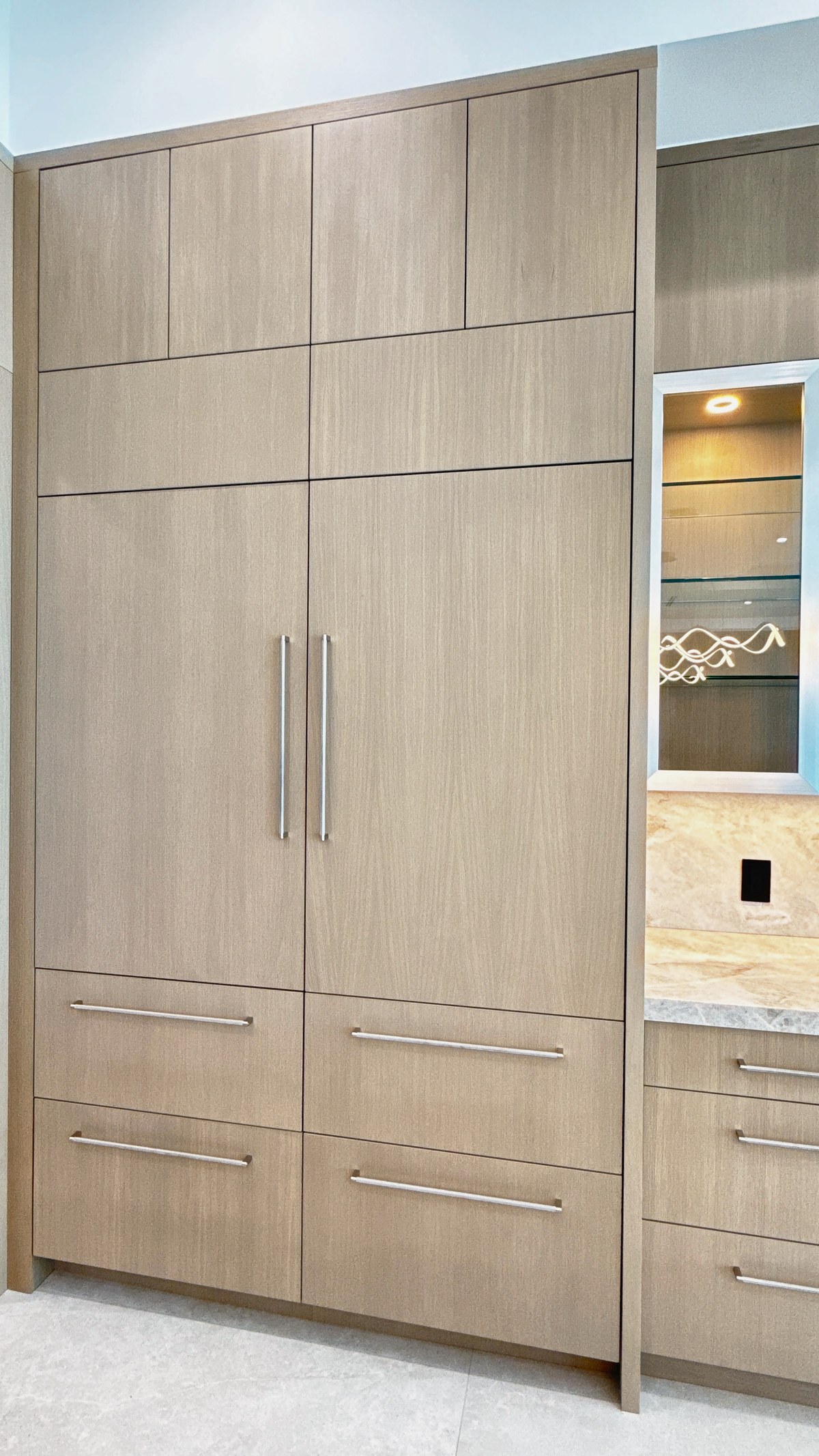
Here’s where most cabinet shops miss the boat. They build cabinets to their own standard tolerances — tight, consistent, beautiful — but they don’t coordinate with the appliance manufacturer’s specs. A flush-build appliance is engineered to integrate with cabinetry; a standard-build appliance is not.
When you specify a flush-build refrigerator, the manufacturer has already accounted for tight gaps. The door thickness, hinge placement, and frame depth are all engineered so a cabinet panel can sit flush without interference. A standard-build model has looser tolerances because it’s not designed to integrate into cabinetry — it’s designed to stand alone.
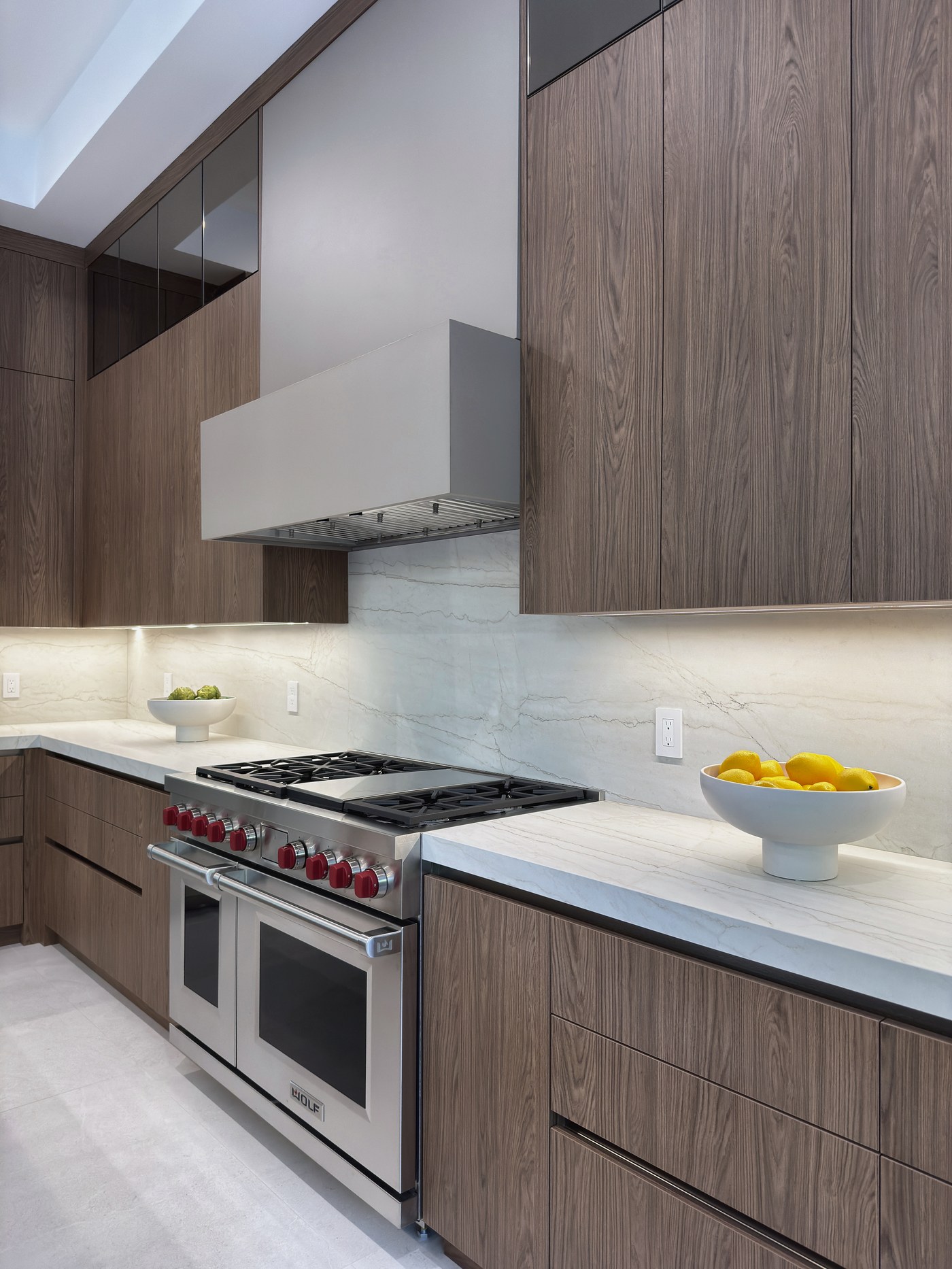
The same applies to hoods. A recessed hood that disappears into soffit cabinetry above your island has to be spec’d to fit that depth, and the blower has to clear the cabinet structure. If the hood is too bulky or the blower isn’t accounted for during the design phase, the cabinet panel vibrates when the hood runs. That’s not a luxury kitchen — that’s a rattle.
We build our cabinets to the appliance manufacturer’s specs, not the other way around. That’s the integration that works.
The Mistake: Picking the Appliance Last
Most kitchens fail at integration because the appliance is an afterthought. The designer or homeowner falls in love with a fridge or a cooktop, purchases it, and then expects the cabinet maker to make it fit flush. It rarely works.
We reverse that. Before a single line is drawn, we ask for the full appliance schedule: refrigerator, dishwasher, cooktop, built-in oven, microwave, hood, ice maker, wine cooler — everything. That list tells us whether the integration is even possible, and if it isn’t, we say so upfront and give you options.
The Tell: What to Ask Any Cabinet Shop
Before you commit to an appliance or sign off on your cabinet drawings, ask your cabinet maker this: “Is this appliance spec’d as a flush-build or standard-build? And have you verified that our cabinet depth and gap tolerance match the manufacturer’s specs?”
If they haven’t asked you for an appliance schedule, or if they seem confused by the question, that’s a red flag. A shop that knows integration doesn’t wing it.
What Designers and Architects Need to Know
For the trade, the lever is the appliance spec at the very beginning of the design phase. Don’t let the client pick the fridge and then design around it. Build the spec first, advise on which models integrate flush, and document that choice on the drawings. When the cabinets are built to those specs and the appliance goes in, the kitchen reads as one piece.
The other detail: concealed LED lighting, toe-kick clearance, and the reveal at the ceiling line are all part of that same integration story. If you’re hiding the hood, you’re also managing airflow, clearance, and how light reads across the soffit. That all cascades from the appliance spec.
The Sunshine Alliance Standard
We’ve built kitchens in South Florida homes ranging from $4 million to $30 million, and the ones that read as one continuous run are the ones where the appliance spec was locked before the first drawing. We request that full schedule, we flag any model that won’t integrate flush, and we build to the manufacturer’s tolerances, not our own. When the hood disappears, the fridge panel reads as cabinetry, and the dishwasher vanishes into the run — that’s integration done right.
It starts with a conversation and a spreadsheet of appliances. Everything else follows.
Related from the Journal
Frequently Asked Questions
How do you make appliances disappear into custom cabinetry?
What’s the difference between a flush-build and standard-build appliance?
When should I decide on appliances during my kitchen renovation?
What happens if a recessed hood vibrates when it runs?
