Call nowOur Address
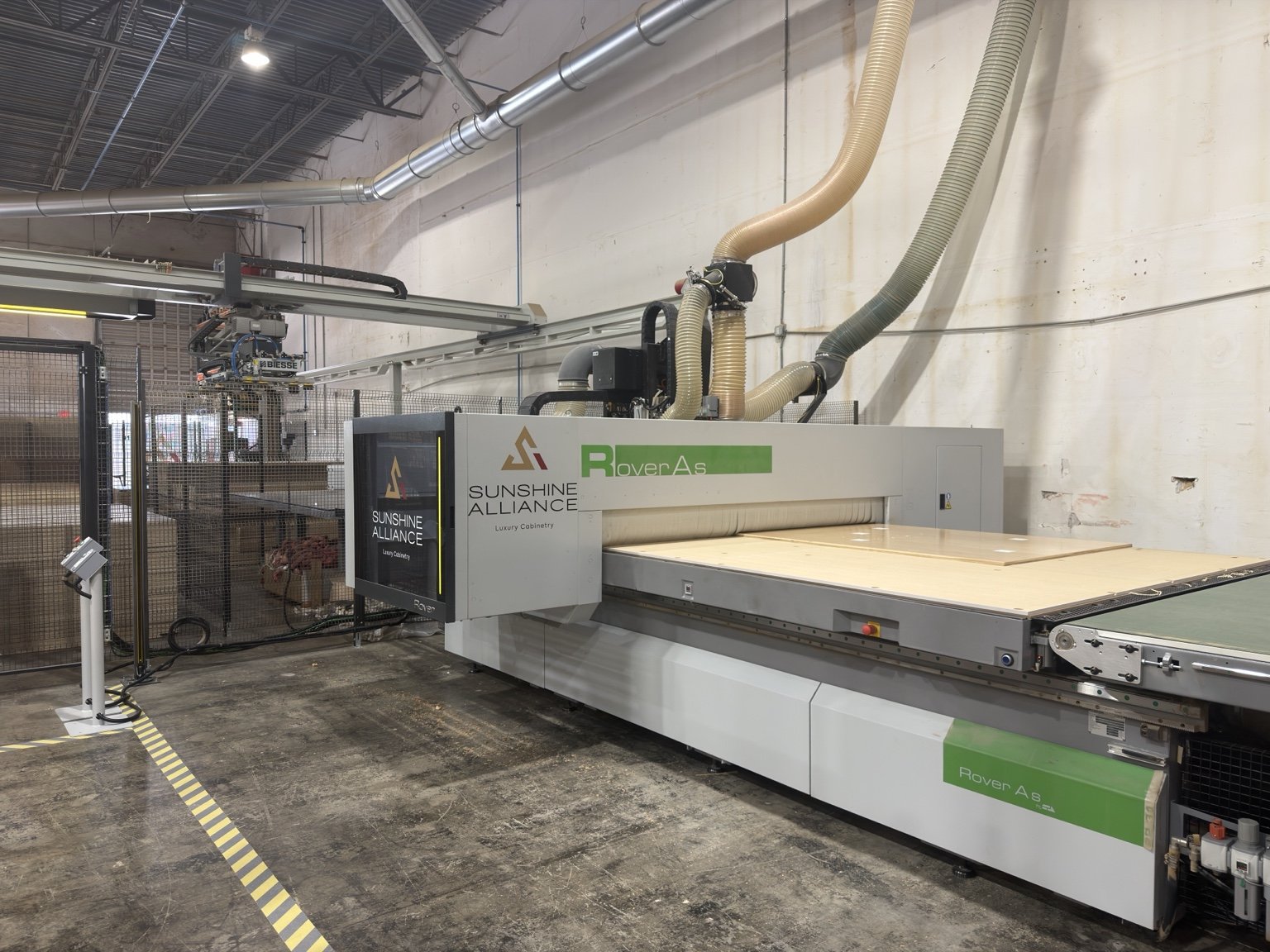
Biesse Rover A CNC router with a panel loaded on the vacuum table, branded Sunshine Alliance guard | Sunshine Alliance, Deerfield Beach FL

Custom Cabinets in Boca Raton: What to Expect from a Local Manufacturer
Custom Cabinetry · South Florida · Since 2002

Biesse Rover A CNC router with a panel loaded on the vacuum table, branded Sunshine Alliance guard | Sunshine Alliance, Deerfield Beach FL

If you’re shopping for custom cabinets in Boca Raton, the most useful question you can ask isn’t about wood or door styles yet. It’s this: does the shop actually manufacture the cabinetry, or does it order and resell it? The answer changes your timeline, your quality, and what happens when something needs to be fixed.

Sunshine Alliance has been established since 2002, and we build in our own plant in Deerfield Beach — the next town up, about ten minutes from our Boca Raton showroom. We’re not a mom-and-pop shop, and we’re not an importer. We’re a local manufacturer with 56 in-house people who draw, engineer, build, finish, and install the work themselves. That’s the short version of what to expect. Here’s what it means in practice.

Scale with a hands-on approach

There’s a real difference between us and a small shop. A good mom-and-pop can do lovely work — often it’s the owner personally building, storing, and finishing the cabinets. The limitation is capacity: a small shop is generally scaled to run one job at a time, so where you land in their queue decides when your kitchen gets built.

We’re scaled with precision. We run CNC machinery and an in-line spray booth, and our equipment holds tolerances down to a fraction of a millimeter. You could fit ten to twelve small shops inside our plant. But scale didn’t cost us the craft — the roots are still handmade. We became a manufacturer without becoming a factory that treats your kitchen like a catalog number. You can come walk the floor and see both things at once: the machinery and the hands.
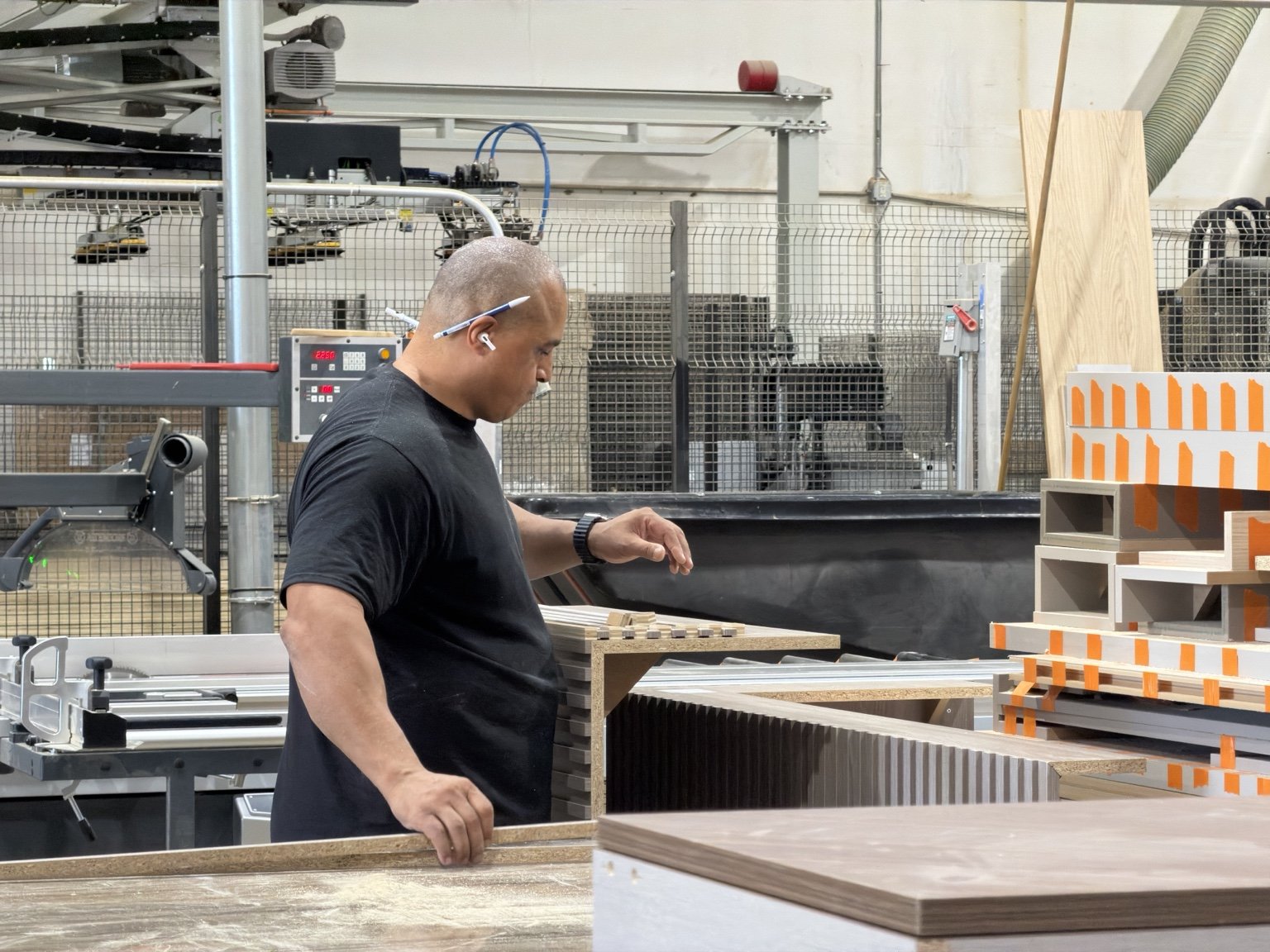
Craftsman handling a stack of melamine-faced panels at the edgebander, banded cabinet boxes stacked alongside | Sunshine Alliance, Deerfield Beach FL

Why being local is the real advantage
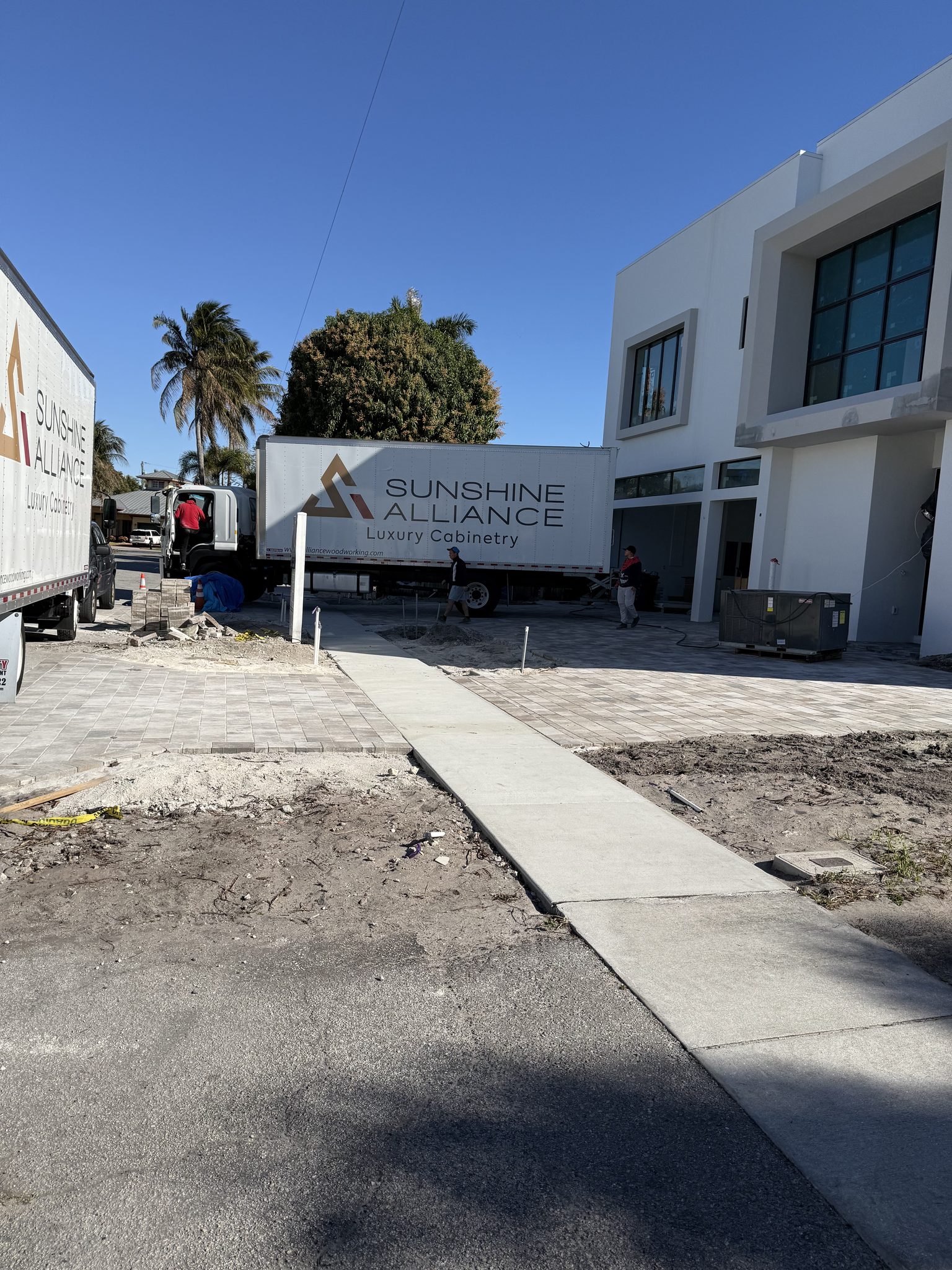
Our own box trucks delivering custom cabinetry to a South Florida job site, the local reach that lets us fix a part the same day | Sunshine Alliance, South Florida

About 80 percent of our work is in Boca Raton, and our plant sits within roughly thirty minutes of most of the homes we build for. That proximity is not a small thing. If a part needs to be reengineered, or a piece arrives damaged and needs to be remade, we’re back on our own factory floor the same day. Custom cabinetry built by a local Boca Raton manufacturer can be corrected in days. Cabinetry ordered from overseas cannot.

We saw exactly what that costs a client not long ago. A developer had spec’d cabinetry for three houses through a showroom that sourced from Italy. He waited eighteen weeks and nothing arrived. When he checked, the order would take another twenty weeks to show up. His three projects were at a standstill and losing money, so he cancelled the overseas order and moved all three houses to us. When cabinets have to show up on time for a build to keep moving, a plant that’s minutes away is worth more than a lower number on a quote.

Here is what that actually looks like on an ordinary day. Someone gets in the van and drives to the shop, and a part gets remade. Our purchasing team buys the extra handle or the accessory a job turns out to need — or the one a client asks for at the last minute. None of that is a project. It is an errand.

And when another trade damages a door or a drawer front, which happens on plenty of builds, we put it in the van, take it to our own finisher, and have it back at the house within a few days. The same part coming from overseas takes weeks. Same problem, same fix, two completely different timelines — and only one of them keeps the rest of the trades moving.

That is the difference proximity makes. It is not a line on a website. It is a door back on its hinges before the client ever notices it was gone.

The mistake that costs more than it saves

The most common mistake we see is choosing the smallest shop to save a little up front. On paper it looks like a few thousand dollars saved. In practice, a small shop is almost always reliant on the pay schedule of the homeowner or the builder. Some builders run a 60-day payment cycle — a smaller shop often can’t absorb that and keep paying its people. So the shop that priced itself the lowest is also the one most likely to run out of working capital partway through a job that runs long.

We’ve been brought in more than once to finish work a smaller shop couldn’t carry to the end. It’s not a knock on their craft — it’s a question of infrastructure and financial stability. A shop that can weather a long project and a slow pay cycle is a shop that will still be standing on the day your cabinets are due.

Where we work

Most of our work is in Boca Raton — Royal Palm is a development we’re in often — and we’ve extended into Sunny Isles and Bal Harbour as designers, builders, and homeowners bring us onto their projects. On the largest homes, builders typically bring us in for the major scope — kitchens, laundries, bars, and closet systems — the wet areas and the built-in backbone of the house. Being clustered locally is what lets us keep that work moving on schedule.

What designers and architects tell their clients

There’s one thing nearly every designer says when they walk a client into our showroom: they’re bringing Sunshine because these are the people they believe in, the ones they can trust to come through in the end and not abandon a job. For architects, it’s about delivery and turnaround — the confidence that the cabinetry will land when the schedule needs it. What earns that trust is exactly the combination above: a cabinet maker that grew into a manufacturer, and kept the handcraft while it did.
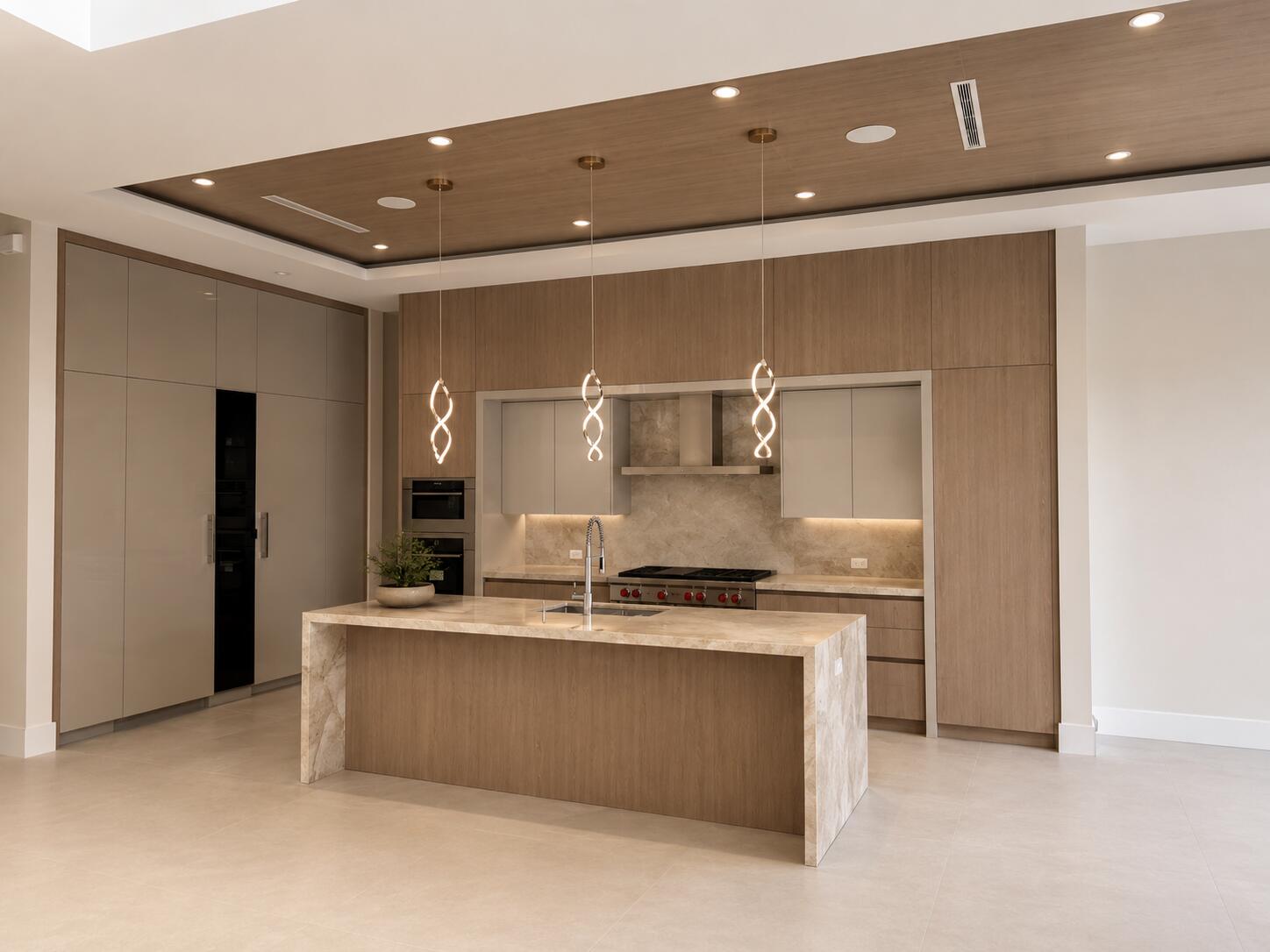
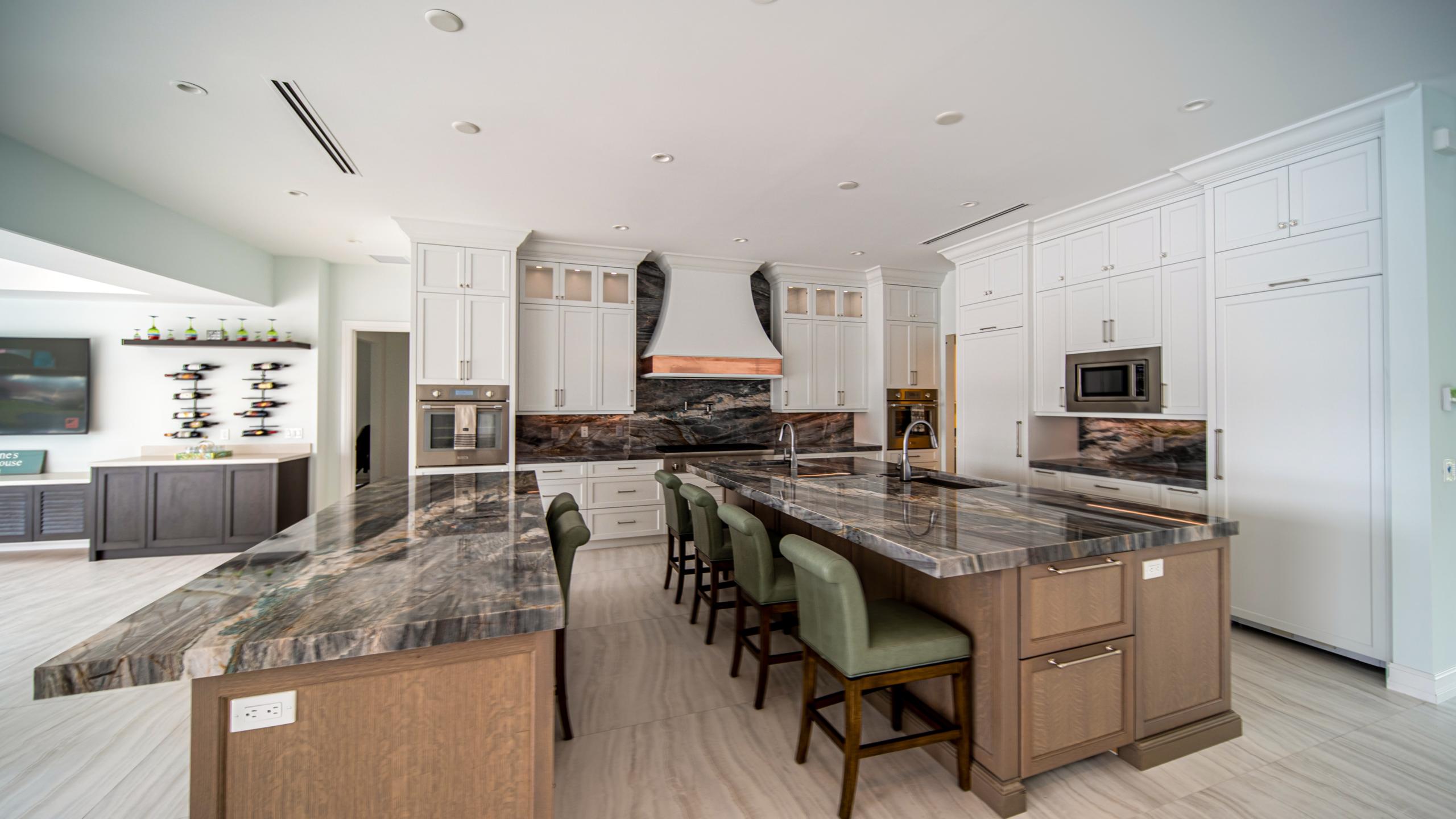
A finished custom wood kitchen with a marble island, the work designers bring their clients into our Boca Raton showroom to see | Sunshine Alliance, Boca Raton FL

The questions to ask a local shop

When you’re choosing a custom-cabinet shop in Boca Raton, ask three things. Do you manufacture the cabinetry yourselves, or order it? What’s your capacity if my project runs long? And can you carry a builder’s pay cycle without stalling? The shop that answers those cleanly is the one that can stand behind the whole project. Everything we make, we make ourselves — right here, minutes from your home.

You can visit our showroom at 257 E Palmetto Park Rd, Boca Raton, or reach us at (561) 367-3652.
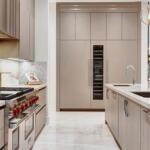
Related from the Journal

Frequently Asked Questions

Is Sunshine Alliance a local manufacturer or a cabinet dealer?
Sunshine Alliance is a local manufacturer. We draw, engineer, build, finish, and install custom cabinetry in our own plant in Deerfield Beach, about ten minutes from our Boca Raton showroom — we don’t order and resell cabinetry made elsewhere.
Why does buying from a local manufacturer matter in Boca Raton?
Because the plant is minutes away, a part can be reengineered or remade the same day if something needs to change. Cabinetry ordered from overseas can take many weeks to correct, which can stall an entire build.
What makes a manufacturer different from a small cabinet shop?
A small shop is usually scaled to one job at a time and often relies on the homeowner’s or builder’s payment schedule to keep going. A manufacturer with in-house scale and financial stability can carry a longer project and a slower pay cycle without stalling, and holds tighter tolerances with CNC machinery and an in-house spray booth.
How long has Sunshine Alliance been in business?
Sunshine Alliance has been established since 2002 — more than two decades — with 56 in-house employees across design, production, finishing, and installation.

Flush-build integrated kitchen appliances reading as one continuous run of cabinetry, Sunshine Alliance custom cabinets Deerfield Beach Florida.

How Do You Make Appliances Disappear Into Custom Cabinetry?

Custom Cabinetry · South Florida · Since 2002

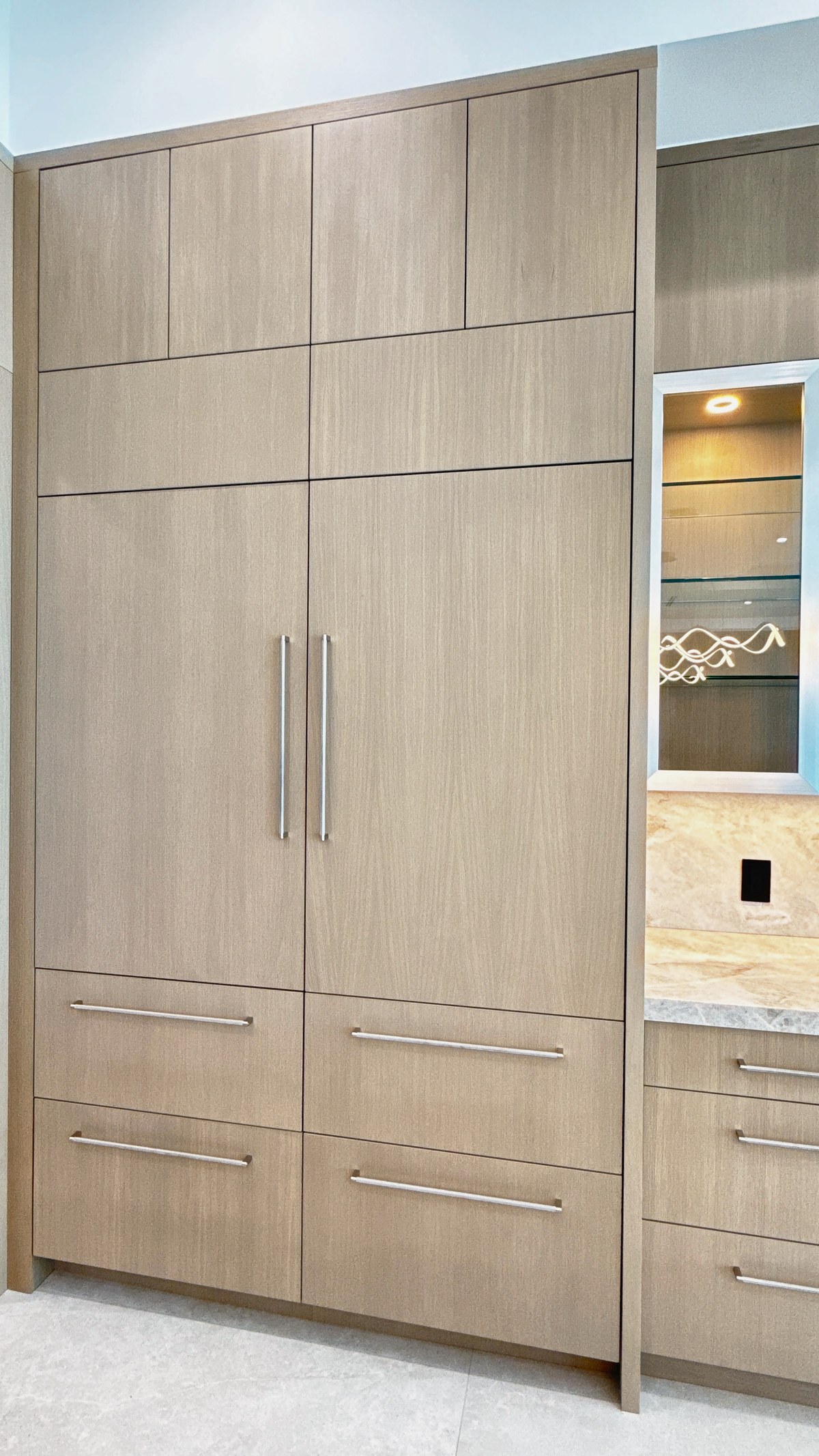
Flush-build integrated kitchen appliances reading as one continuous run of cabinetry, Sunshine Alliance custom cabinets Deerfield Beach Florida.

When you walk into a luxury kitchen and a refrigerator, hood, or dishwasher seems to vanish into the cabinetry — reading as one continuous run of millwork rather than appliances with cabinet doors stuck on them — you’re seeing the result of one decision made months before the cabinets were built.

That decision is the appliance spec.

The Direct Answer

Panel-ready and integrated appliances only disappear when three things align: the appliance model is spec’d for flush integration, the cabinet maker builds to the appliance manufacturer’s tolerances (not his own), and the gaps between the appliance panel and surrounding cabinetry match the gaps between your cabinet doors. On high-end appliances, that gap is one eighth of an inch. On less expensive models, it can open up to half an inch, and suddenly your “integrated” hood or fridge looks like an afterthought.

The cabinet maker cannot fix a poorly spec’d appliance. But a sharp cabinet maker catches it before the cabinets are drawn and gives you the choice to swap it out or live with the bigger reveal.

The Story: When the Wrong Model Goes In

We’ve flagged this a handful of times over the years. A homeowner or designer falls in love with a refrigerator that looks great in the showroom, but when we pull the specs — depth, door thickness, hinge clearance, the whole picture — we see it won’t sit flush in the cabinetry they’ve designed. The gap between the panel and the fridge frame is too loose. Once the cabinets are built to the correct specs, the appliance looks like it’s floating.

At that point, there’s no cabinet fix. The homeowner’s choice is simple: swap the refrigerator for a model that integrates tighter, or accept the bigger reveal and let the kitchen read differently than planned.

The Mechanism: Why Flush-Build Matters

Here’s where most cabinet shops miss the boat. They build cabinets to their own standard tolerances — tight, consistent, beautiful — but they don’t coordinate with the appliance manufacturer’s specs. A flush-build appliance is engineered to integrate with cabinetry; a standard-build appliance is not.

When you specify a flush-build refrigerator, the manufacturer has already accounted for tight gaps. The door thickness, hinge placement, and frame depth are all engineered so a cabinet panel can sit flush without interference. A standard-build model has looser tolerances because it’s not designed to integrate into cabinetry — it’s designed to stand alone.

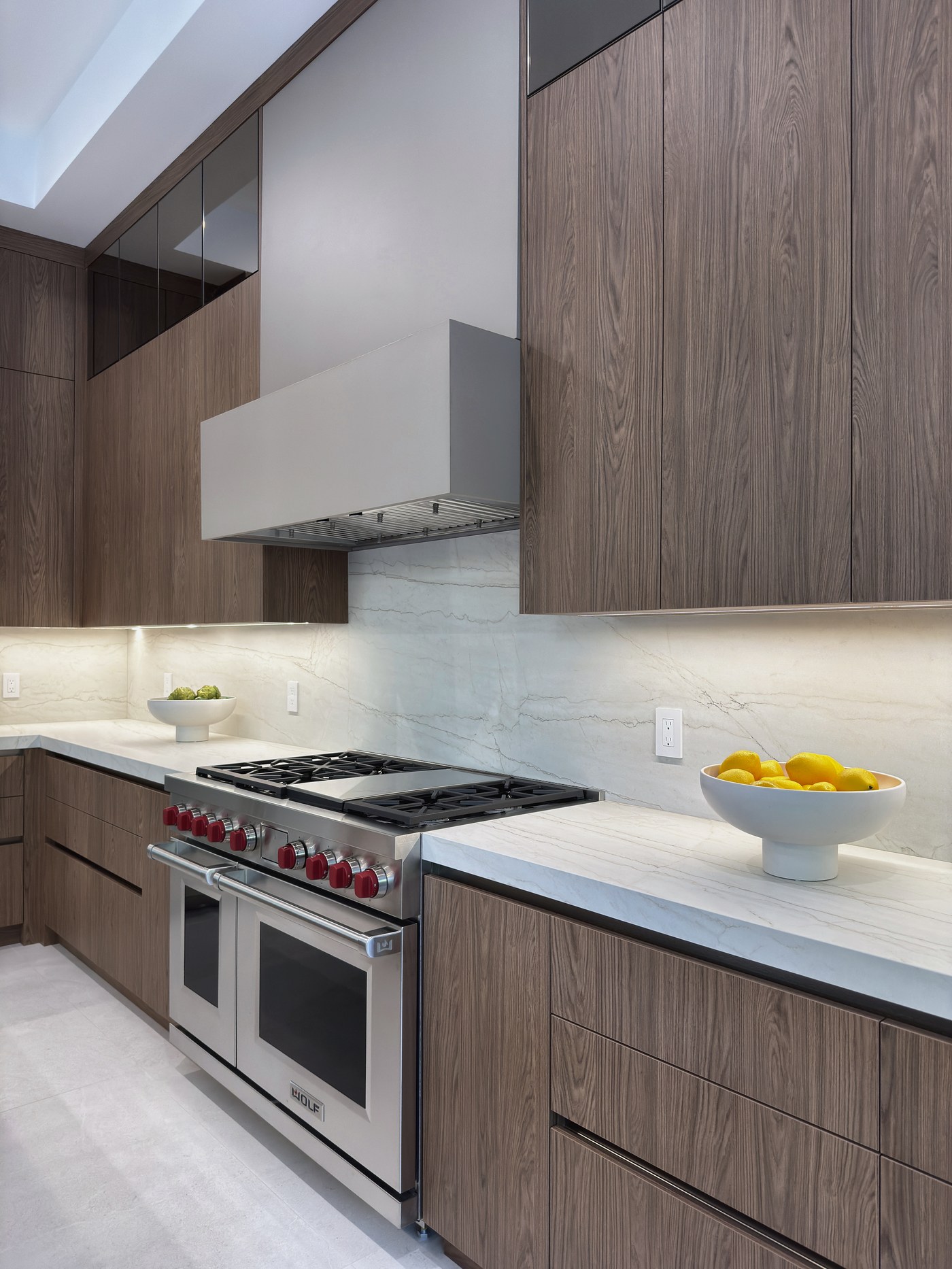
The same applies to hoods. A recessed hood that disappears into soffit cabinetry above your island has to be spec’d to fit that depth, and the blower has to clear the cabinet structure. If the hood is too bulky or the blower isn’t accounted for during the design phase, the cabinet panel vibrates when the hood runs. That’s not a luxury kitchen — that’s a rattle.

We build our cabinets to the appliance manufacturer’s specs, not the other way around. That’s the integration that works.

Panel-ready refrigerator sitting flush with custom cabinetry, Sunshine Alliance precision integration, Deerfield Beach.
Panel-ready refrigerator sitting flush with the cabinetry run

The Mistake: Picking the Appliance Last

Most kitchens fail at integration because the appliance is an afterthought. The designer or homeowner falls in love with a fridge or a cooktop, purchases it, and then expects the cabinet maker to make it fit flush. It rarely works.

We reverse that. Before a single line is drawn, we ask for the full appliance schedule: refrigerator, dishwasher, cooktop, built-in oven, microwave, hood, ice maker, wine cooler — everything. That list tells us whether the integration is even possible, and if it isn’t, we say so upfront and give you options.

The Tell: What to Ask Any Cabinet Shop

Before you commit to an appliance or sign off on your cabinet drawings, ask your cabinet maker this: “Is this appliance spec’d as a flush-build or standard-build? And have you verified that our cabinet depth and gap tolerance match the manufacturer’s specs?”

If they haven’t asked you for an appliance schedule, or if they seem confused by the question, that’s a red flag. A shop that knows integration doesn’t wing it.

Custom canopy hood integrated into cabinetry above the range, Sunshine Alliance millwork, South Florida.
Canopy hood integrated into the cabinetry above the range

What Designers and Architects Need to Know

For the trade, the lever is the appliance spec at the very beginning of the design phase. Don’t let the client pick the fridge and then design around it. Build the spec first, advise on which models integrate flush, and document that choice on the drawings. When the cabinets are built to those specs and the appliance goes in, the kitchen reads as one piece.

The other detail: concealed LED lighting, toe-kick clearance, and the reveal at the ceiling line are all part of that same integration story. If you’re hiding the hood, you’re also managing airflow, clearance, and how light reads across the soffit. That all cascades from the appliance spec.

The Sunshine Alliance Standard

We’ve built kitchens in South Florida homes ranging from $4 million to $30 million, and the ones that read as one continuous run are the ones where the appliance spec was locked before the first drawing. We request that full schedule, we flag any model that won’t integrate flush, and we build to the manufacturer’s tolerances, not our own. When the hood disappears, the fridge panel reads as cabinetry, and the dishwasher vanishes into the run — that’s integration done right.

It starts with a conversation and a spreadsheet of appliances. Everything else follows.

Related from the Journal

Frequently Asked Questions

How do you make appliances disappear into custom cabinetry?
Panel-ready appliances disappear when the appliance is spec’d for flush integration, the cabinet maker builds to the appliance manufacturer’s tolerances, and the gaps between the appliance panel and surrounding cabinetry match the gaps between your cabinet doors. High-end appliances hold one-eighth-inch gaps, while less expensive models may have half-inch gaps. The cabinet maker cannot fix a poorly spec’d appliance, but a sharp cabinet maker flags it before the cabinets are drawn.
What’s the difference between a flush-build and standard-build appliance?
A flush-build appliance is engineered to integrate with cabinetry with tight, consistent gaps. A standard-build appliance is designed to stand alone with looser tolerances. When you specify a flush-build refrigerator or hood, the manufacturer has already accounted for tight gaps in the door thickness, hinge placement, and frame depth.
When should I decide on appliances during my kitchen renovation?
Appliances should be spec’d before the cabinets are drawn. Request a complete appliance schedule at the start of every project — refrigerator, dishwasher, hood, oven, cooktop, everything. This lets your cabinet maker advise you on which models integrate best and ensures the cabinets are built to the appliance manufacturer’s specs.
What happens if a recessed hood vibrates when it runs?
Vibration usually means the hood was spec’d without accounting for blower clearance or cabinet structure. The cabinet panel shakes because the blower isn’t braced properly or the hood is too bulky for the space. This is caught during the design phase when a sharp cabinet maker reviews the full appliance specs.

Can I Actually Visit the Shop and See My Cabinets Being Built?

Custom Cabinetry · South Florida · Since 2002

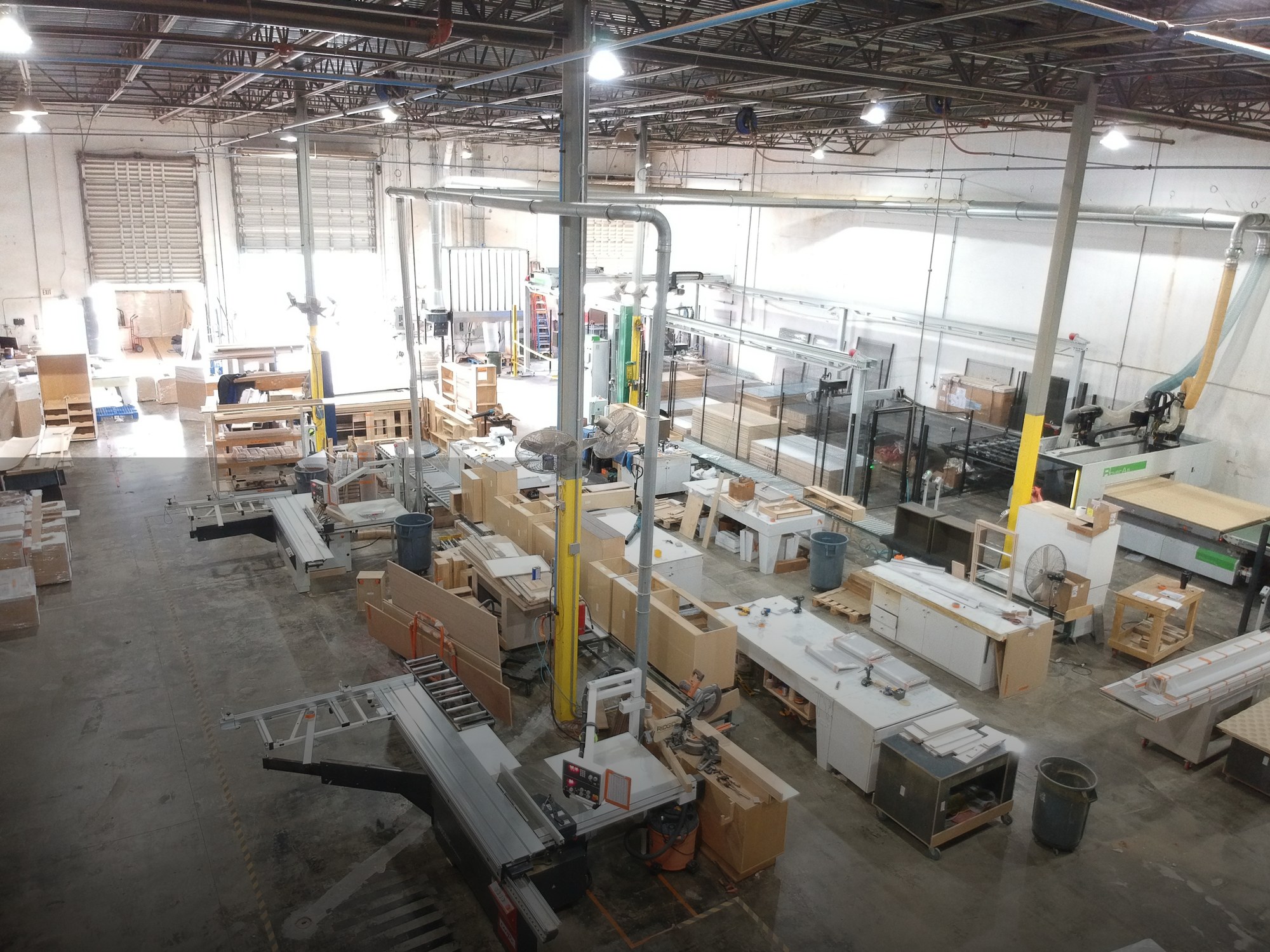
Working shop floor at Sunshine Alliance, Biesse Rover A router and Stream A Smart edge bander in operation, Deerfield Beach Florida.

Yes. By appointment, with a safety vest and goggles, and most people who do it become clients.

That last part isn’t a sales line. It’s the most reliable pattern we’ve seen in more than two decades: when someone walks our factory floor, the conversation changes. They stop asking whether we can build their kitchen and start asking how quickly we can do it.

The Direct Answer

We encourage it. Our salespeople are expected to bring builders, designers, architects, developers, and homeowners onto the floor, because a showroom can only tell you so much. A beautiful showroom in Boca Raton has a sales rep in it, maybe two, and a secretary. That is not evidence of anything. Anyone can rent a showroom.

The factory is different. Walk in and you’re in the office first — roughly 2,500 square feet with seven engineers drawing kitchens, the accounting office, the sample library, sales staff working with builders. Then you go through one door and the shop floor opens up behind it. Nineteen people, in one location, making cabinets. A Biesse Rover A router, fed by a Winstore X3 panel-storage system. A Biesse Stream A Smart edge bander, immediately to the right as you come through. Italian machines, and you can watch them run.

Nobody has ever walked through that door and told us the shop looked small.

The Story: A Developer, Recently

A spec developer came through not long ago. He’d been doing what anyone should do — collecting quotes, comparing portfolios, deciding who to trust with a large order.

He walked the office. He walked the shop floor. Then we walked him over to the new facility, where the machines are already in place. He went quiet. When he spoke again, he congratulated us on the scale of the operation, and the questions he’d arrived with were gone. He wasn’t asking whether we could handle his project anymore. He was asking about capacity and turnaround.

That is the entire mechanism of a factory visit, and it is the pattern we see most.

The Mechanism: Why a Working Floor Persuades and a Portfolio Doesn’t

A portfolio is a photograph of an outcome. It proves someone, somewhere, once built a beautiful kitchen. It cannot tell you who built it, whether they still work there, or whether the company will exist when a door needs adjusting in year three.

A working factory answers all three at once, without anyone making a claim. You see the machines. You see the people. You see material moving. You see cabinets in progress that belong to somebody else’s house — which is the clearest possible evidence that yours will be built the same way.

For builders, the read is capacity. They look at the equipment and the floor and understand they have a partner who can grow with their business rather than a shop that will become a bottleneck.

For designers, it’s the finish. When you can see finishing handled inside one production line rather than farmed out or sprayed on a job site, custom color and stain stop being a risk you have to manage on behalf of your client. That changes how you specify.

What’s Coming Online

We’re moving into a 24,000-square-foot climate-controlled facility over the next few months. Today’s shop is about 10,000 square feet of production plus 2,000 of office, and it is not climate-controlled. The new plant is.

The machines are already in. Two Biesse routers, both larger than the Rover A we run today, against the single router currently operational. Winstore panel-storage capacity goes from 800 sheets to 3,000. And the finishing line — an inline sander, an automatic sprayer, a dry line, and an oven that cures the finish — sits where you first come through the back door, so it’s the first thing a visitor sees.

Climate control is the part that matters most in South Florida, and it is the part nobody puts in a photograph. A finish cured in conditioned air is stable before it ever leaves the building.

The Mistake: Treating a Catalog and a Factory as the Same Purchase

There is nothing wrong with the large out-of-state and overseas manufacturers. They exist for a reason and they serve their customers. If you buy from a catalog through a dealer, you will likely get a decent cabinet.

What you will not get is a floor to walk. You will not get the ability to call in the middle of a build and come see your own boxes. And if something goes wrong in year four, you will be working through a middleman to reach a factory you have never seen, in a state or a country you have never visited.

That is a different purchase from the one people think they’re making. It’s worth knowing which one you’re making.

The Tell: What to Ask Any Cabinet Shop

Ask this: “Can I come see my cabinets being built?”

Then listen to the shape of the answer. A shop that manufactures will say yes and immediately start talking about scheduling and safety, because those are the real constraints. A shop that outsources will talk about the showroom, the portfolio, the process, the relationship. All fine words. None of them are a floor.

The follow-up worth asking: “What will I see when I walk in?” A manufacturer can describe the route through the building from memory.

What Builders, Designers, and Architects Should Know

About 80 percent of our work now comes from builders, designers, architects, and developers. The other 20 percent is homeowners. Everyone gets the same cabinet. The same 3/4″ case, the same dovetailed solid-maple drawer boxes or Blum LEGRABOX, the same Blum hardware, the same soft-close full-extension on every door and drawer. A homeowner’s bar unit is built the way a developer’s multifamily package is built. You can specify it either way.

The reason to bring your client to the floor is not that it flatters us. It’s that it settles the question of who is actually making the thing, which protects your specification and your relationship when the job gets complicated.

The Sunshine Alliance Standard

We started in 2002 in a 400-square-foot shop. More than two decades later, everything is still drawn, engineered, built, and installed by us.

The visit is by appointment for one reason: forklifts are running, material is moving, and heavy machinery is in operation. When you come, you get a vest and goggles, and our operators slow the floor down so they can see you and work around you. That is not hospitality theater. It’s what it costs to walk through a factory that is actually running.

And if you’re ever second-guessing whether your cabinets are being built the way you specified — come in. Look at them. Touch them. We’re not going anywhere.

Related from the Journal

Frequently Asked Questions

Can I actually visit the shop and see my cabinets being built?
Yes. Sunshine Alliance welcomes builders, designers, architects, developers, and homeowners onto the factory floor in Deerfield Beach by appointment. Visitors are issued a safety vest and goggles because forklifts and heavy machinery are in operation. You will see the design and engineering office, a Biesse Rover A CNC router fed by a Winstore X3 panel-storage system, a Biesse Stream A Smart edge bander, and cabinets in production.
Why is the factory visit by appointment instead of open to walk-ins?
Safety. The shop is a working production floor five days a week. Forklifts move material, carts move parts, and heavy machinery runs continuously. Visitors wear a safety vest and goggles so operators can see them clearly and slow the floor while they pass through. Scheduling the visit is what allows it to happen safely without disrupting production.
Why does seeing the factory matter more than seeing a portfolio?
A portfolio shows a finished kitchen but cannot tell you who built it, whether that team still works there, or whether the company will exist years later when a door needs adjusting. A working factory shows the machines, the people, and cabinets in progress for other clients. It answers the question of permanence without anyone having to make a claim about it.
What should I ask a cabinet shop that says it builds custom cabinets?
Ask whether you can come see your cabinets being built, then ask what you will see when you walk in. A shop that manufactures will answer with scheduling and safety constraints and can describe the route through the building from memory. A shop that outsources will redirect to the showroom, the portfolio, or the process.

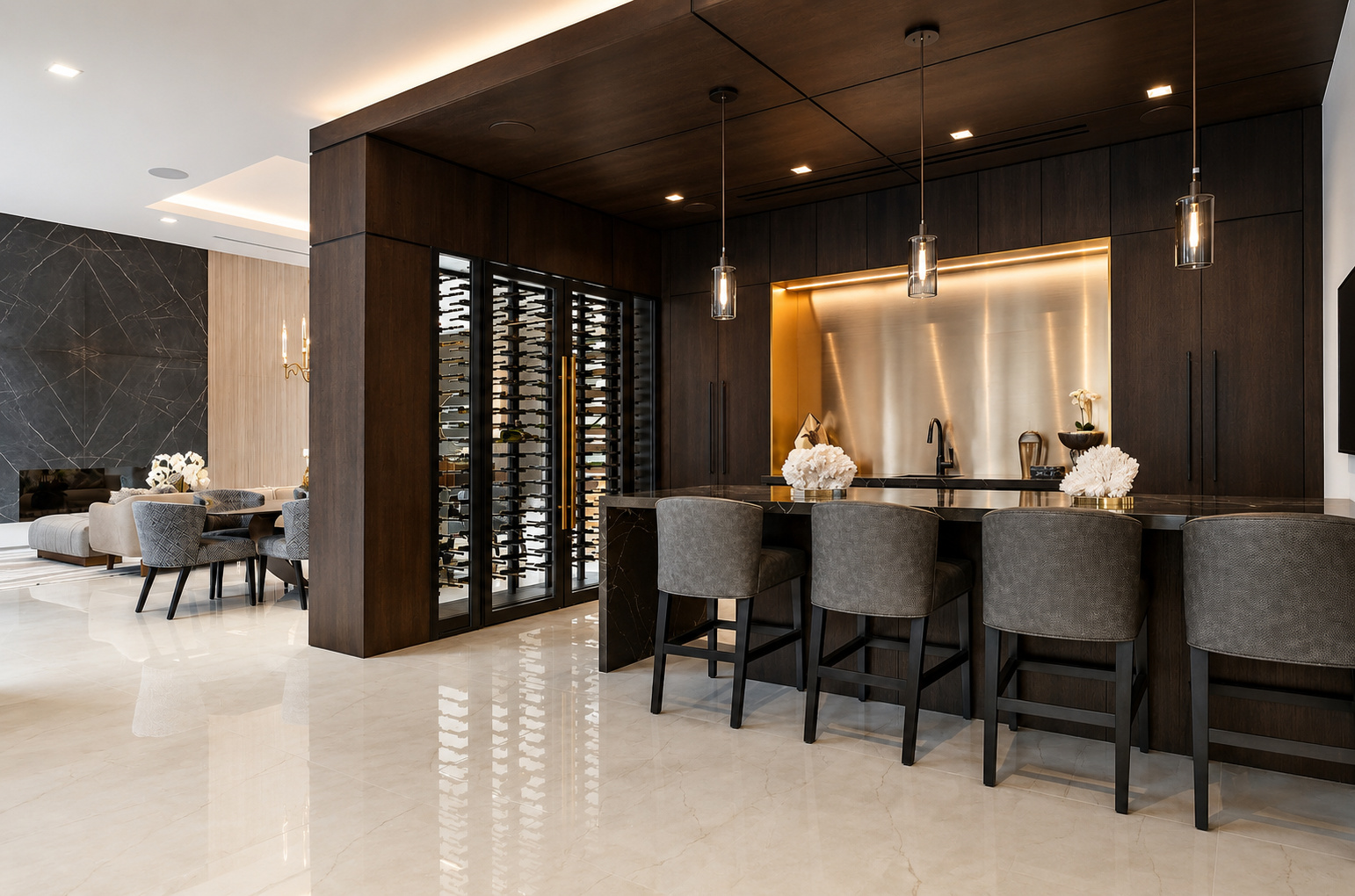
Custom wood-paneled wine wall and bar millwork | Sunshine Alliance, Boca Raton FL

What’s a Realistic Lead Time for Custom Cabinets — and Is a Fast Quote a Red Flag?

Custom Cabinetry & Millwork · South Florida · Since 2002

Custom wood-paneled wine wall and bar millwork | Sunshine Alliance, Boca Raton FL

Here’s the answer from a manufacturer that has been building custom cabinetry in South Florida since 2002: for a full custom project, a realistic lead time is 8 to 14 weeks — and yes, a dramatically faster quote is usually a red flag, not a bargain. The reason is simple. A quality cabinet manufacturer sources specific material for your job, builds against a continuous queue of work, and gives every project the attention to detail it deserves. A shop that can start your six-figure project tomorrow is a shop with an empty pipeline — and in this market, you should ask yourself why.

Below is the longer answer: why the timeline is what it is, the pattern we’ve rescued more customers from than we can count, when a short timeline is actually legitimate, and the two questions that expose whether any quote is real.

Why 8 to 14 weeks is the honest number

When a client tells us another shop promised four weeks, we understand the appeal — cabinetry is famously the bottleneck of a renovation, and everyone wants their kitchen back. But our lead time runs 8 to 14 weeks for specific reasons. We source material specifically for your job — your exact board, your exact finish — rather than pulling from whatever happens to be sitting in a warehouse. And we’re busy. Quality cabinet makers in South Florida are always busy; our queue of work is continuous. That queue isn’t an inconvenience — it’s the evidence. It means every job ahead of yours got finished, delivered, and installed, and yours will get the same attention to detail.

Put bluntly: if a manufacturer capable of handling a large project is sitting idle and can start tomorrow, that is a major red flag. No manufacturing company that can genuinely handle a $100,000-plus scope is waiting around for one job. At that level, everyone competent is booked.

The pattern we keep getting called to fix

Over the life of our business, we have repaired a significant amount of other companies’ work — and the story is almost always the same. A contractor promises a quick, fast delivery. They collect the deposit. Then they disappear, or they drop off cabinets with no doors and no drawers and stop answering the phone. We’ve had customers come to us at week ten, twelve, fifteen — half-finished kitchen, large deposit gone — asking us to please help. And at that point, they’re back to square one. Had they started with a realistic timeline from the beginning, they’d have been halfway to a finished kitchen instead of starting over.

We’ve watched companies come and go in this market. It’s the horror story that haunts South Florida renovations, and the four-week promise is usually how it starts.

When a short timeline is legitimate

Honesty cuts both ways, so here’s ours: scope determines everything. A single guest-bath vanity or one closet doesn’t need a ten-week wait — those we can often fit into the production line in three to five weeks, and it would be unreasonable to ask a client to wait longer for something that small. But a full home — kitchen, multiple bathrooms, laundry, closets — cannot be manufactured in four weeks by anyone with an active pipeline. We currently handle projects approaching a million dollars in cabinetry and built-ins alone. We would be lying to a customer if we said a full house could turn in less than ten weeks. It’s unrealistic, and any shop telling you otherwise is telling you what you want to hear.

So when you’re comparing quotes, the first question isn’t “how fast?” It’s “how fast, for this scope?”

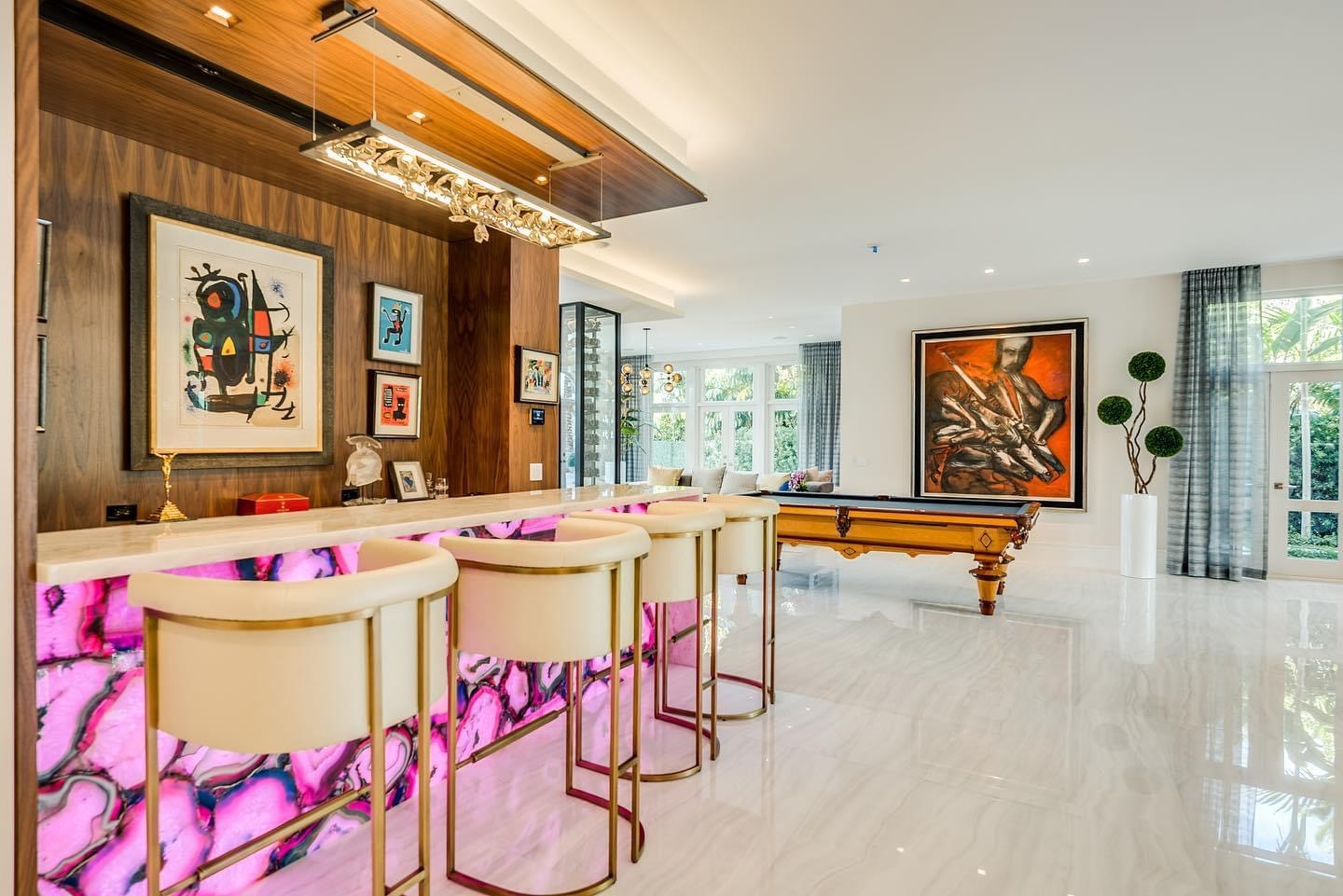
Backlit custom bar and game-room millwork with onyx front | Sunshine Alliance, Boca Raton FL
Custom bar and millwork, engineered and built in-house — Sunshine Alliance, South Florida

The test: walk the floor, not the showroom

When a customer walks in holding a four-week guarantee against our ten-to-fourteen-week quote, we tell them the same thing: call that shop and ask to walk their floor. See what they’re actually building. Ask for references. Ask to walk a finished job — not just a beautiful showroom, and not just a salesperson who offers to come measure your house. If there’s no floor to walk, someone is selling you something out of a car.

Here’s what that test looks like at our operation. Our showroom is in Boca Raton; our factory is in Deerfield Beach — 24,000 square feet, two large CNCs running simultaneously side by side, and 56 people working every day, Monday through Saturday, sometimes running late double shifts to keep production on schedule. Our delivery trucks and installation teams are in-house. When you walk our factory floor — not just the showroom — you understand the difference between a manufacturer and a middleman in about two minutes.

We have never walked away from a job — finishing what we start is the standard we run the shop on. The know-how, the capacity, and the queue are all real, and all visible. That’s why we’re comfortable telling you the honest number instead of the comfortable one.

Drawn, engineered, and built in one place

We’re a manufacturer, not a dealer. Every project is drawn, engineered, and built under one roof in Deerfield Beach — which is exactly why our timeline is both longer than the fantasy quotes and shorter than the horror stories. The material is sourced for your job, the machines and the people are ours, and nothing about the schedule depends on a container crossing an ocean or a subcontractor answering the phone.

If you’re collecting quotes right now, bring them to the showroom — and then come walk the floor.

Related from the Journal

Frequently Asked Questions

What is a realistic lead time for custom cabinets?
For a full custom project, 8 to 14 weeks is realistic. A quality manufacturer sources material specifically for each job and builds against a continuous queue of work. Small single pieces — one vanity or one closet — can often be fit into the production line in 3 to 5 weeks.
Is a 4-week custom cabinet quote a red flag?
For a full kitchen or whole-home scope, yes. No manufacturer capable of handling a $100,000+ project is sitting idle and able to start tomorrow — at that level, competent shops are booked. A four-week promise on work every serious shop quotes at ten-plus weeks usually signals either an empty pipeline or a promise made to collect a deposit.
How do I verify a cabinet shop can actually deliver on time?
Ask to walk the factory floor — not just the showroom — and ask to see a finished job and references. A real manufacturer has a visible operation: Sunshine Alliance runs a 24,000 sq ft Deerfield Beach factory with two CNCs running simultaneously, 56 employees working Monday through Saturday, and in-house delivery and installation teams.
Why do custom cabinet projects get abandoned mid-job in South Florida?
A common pattern: a contractor promises a fast delivery, collects the deposit, then disappears or delivers incomplete cabinets — no doors, no drawers. Customers end up 10 to 15 weeks in with a half-finished kitchen and must start over. Verifying a real factory, a real queue, and finished references before paying a deposit prevents most of these cases.

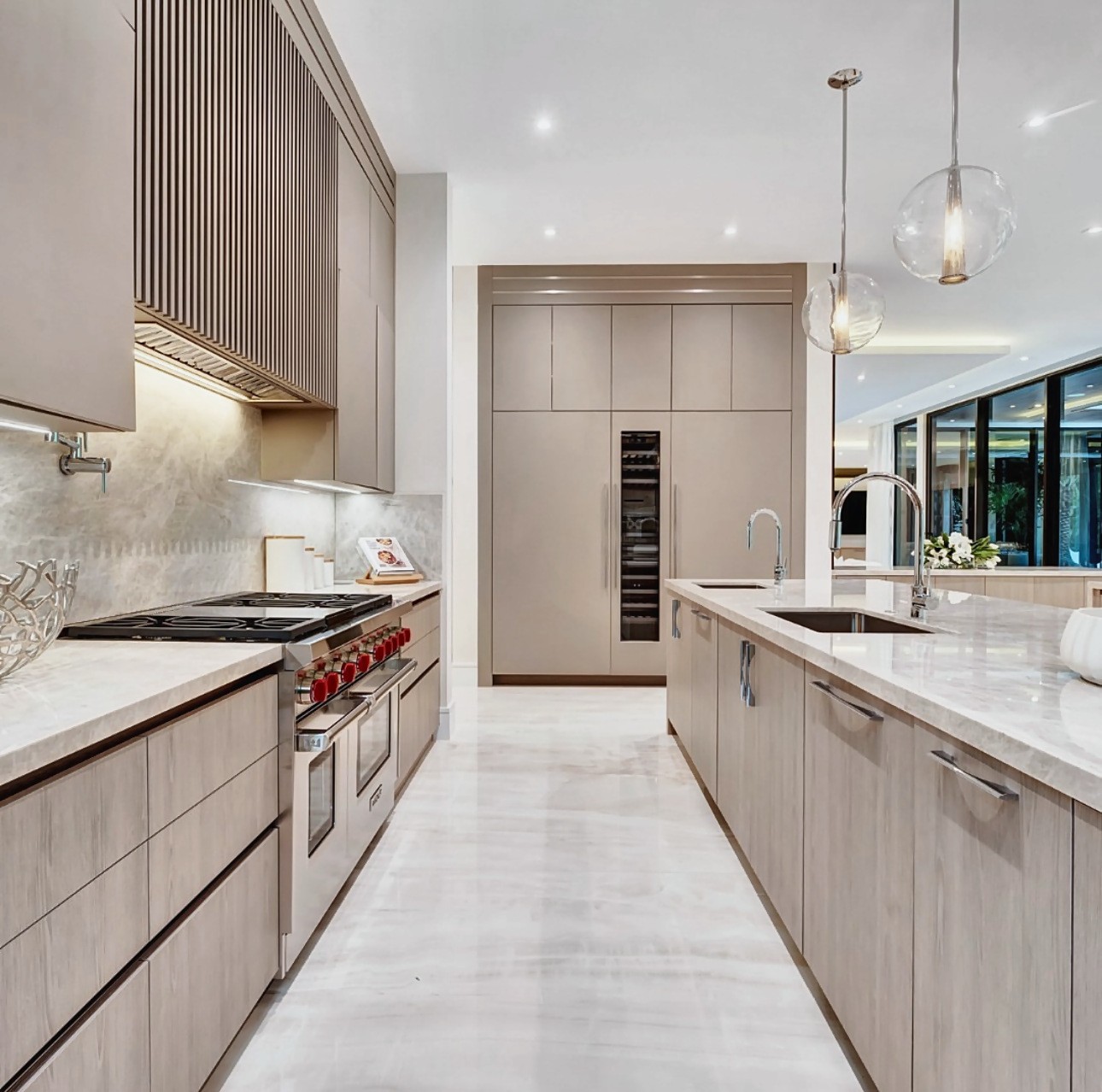
Custom white oak and painted kitchen with a natural-stone island | Sunshine Alliance, Boca Raton FL

When Do You Actually Need Custom Cabinets — and When Is Semi-Custom Enough?

Custom Cabinetry · South Florida · Since 2002

Custom white oak and painted kitchen with a natural-stone island | Sunshine Alliance, Boca Raton FL

Here’s the honest answer, from a manufacturer that has been building custom cabinetry in South Florida since 2002: the question is framed wrong. Custom was never really about sizes and increments. Semi-custom can get a box close to your wall dimensions — that part is true. What it cannot do is give you the kitchen exactly the way you want it: your exact shade, your exact spacing, your exact specifications, designed around your home’s light and your view instead of pulled from a catalog that everyone else can order from too. A kitchen remodel is likely the biggest decision you’ll make in your house that you live with every single day. That — not the increments — is what custom is for.

Below is the longer answer, including the pattern we see constantly in South Florida new construction, the mistake buyers make in showrooms, and the questions that tell you whether any shop actually deserves the word “custom.”

The kitchen is not like the rest of the house

A roof, you only notice when you step outside. The kitchen, you wake up to. Coffee, lunch, dinner. Friends come over and everybody ends up standing around it. The parties happen there, Thanksgiving and Christmas happen there, and it’s the room the kids come home to looking for their mother’s cooking. People don’t gather in the living room to watch TV anymore; they gather in the kitchen.

That’s why “good enough” sits differently in this room than anywhere else in the house. Sacrificing the exact color, the exact dimensions, the exact function you wanted — in the one space you use every day of your life — is a compromise you re-encounter every morning.

The pattern we see over and over: brand-new kitchens, never used

Here is something that happens frequently in South Florida, and we’ve watched it repeat for years. A family relocates from out of state and buys new construction from one of the big-name builders. The builder’s upgrade pricing for the kitchen is outrageous, so they sign off on the standard base package. Then they move in — and they hate their kitchen.

Over the years, we have ripped out hundreds of those kitchens. Brand new. Never used. And when those homeowners come to us, they discover two things that surprise them. First, going directly to a cabinet manufacturer is often less expensive than the builder’s upgrade path would have been. Second, instead of the builder’s limited option sheet, they can have exactly what they wanted — the precise shade of white oak, the precise tone of a painted finish. We’re open to every color in the spectrum, because we make the cabinetry ourselves. Where we can, we repurpose the removed cabinets into a garage or utility space — but the lesson stands: the “affordable” standard package became the most expensive kitchen in the house, because it got paid for twice.

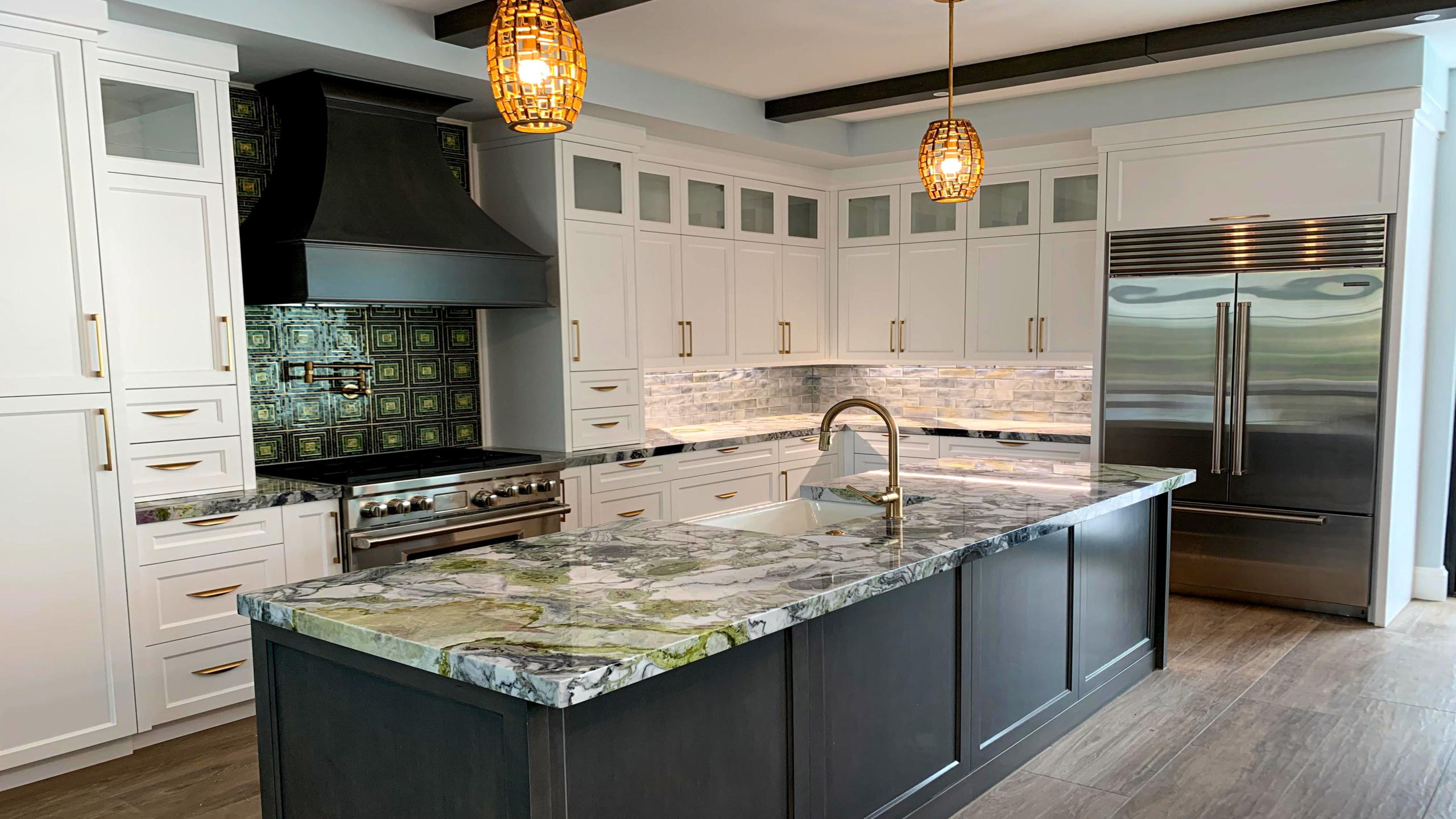
White custom kitchen with a green quartzite waterfall island and brass fixtures | Sunshine Alliance, Boca Raton FL
Custom kitchen, designed, built and finished in-house — Sunshine Alliance, South Florida

The showroom illusion

The mistake buyers make with semi-custom isn’t about the product — it’s about where they evaluate it. Showrooms are built to impress. The lighting is perfect, the ambiance is perfect, the sound is perfect. Your house has none of that lighting. It’s one thing to love a kitchen on a drawing or in a staged vignette; it’s a whole different thing when it lands in your actual space.

A semi-custom purchase usually means a designer who will never see your home and will never touch the process — working a kind of Tetris with the parts and pieces the catalog offers. Some of those catalogs are enormous and expensive. It doesn’t matter. It’s not about the catalog; it’s about whether the person designing your kitchen has the experience to walk your house and pull the little details together.

That’s what a custom manufacturer does differently. We analyze the way your kitchen actually lives: which way it faces, where the light comes from, whether it looks out on the water — because if your kitchen faces a lake, you don’t want to miss that view. More than two decades of building for South Florida homes comes with us into your house, with your lighting and your vision in mind.

The transparency test: what to ask before you sign

Whether a shop deserves the word “custom” shows up in how transparent the designer is about what’s actually being specified. Before you sign either quote, ask:

What exactly are the sheet goods, and is the case built 3/4″ throughout? Is the material formaldehyde-free? Was this cabinetry built for South Florida — or in a shop two thousand miles away, for a completely different climate than the one your kitchen will live in? Is the hardware Blum — the industry standard, and the only hardware we use? And are there options that could be shown to you that wouldn’t increase the cost?

A shop that answers those questions without hesitating is building something real. A shop that can’t is selling you a catalog.

Drawn, engineered, and built in one place

We’re a manufacturer, not a dealer. Every kitchen we build is drawn, engineered, and built under one roof at our factory in Deerfield Beach — which is why we can offer any color in the spectrum, spec the case 3/4″ throughout, and design around your house instead of around a catalog. This is the biggest remodeling decision you’ll live with every day. Never settle for second best — and never settle for somebody else’s catalog.

If you’re weighing a semi-custom quote, or you just closed on new construction and the kitchen isn’t what you wanted — bring it to the showroom.

Related from the Journal

Frequently Asked Questions

When do you actually need custom cabinets instead of semi-custom?
Custom isn’t about size increments — semi-custom can approximate dimensions. Custom is warranted when you want the kitchen exactly your way: your exact finish shade, spacing, and specifications, designed around your home’s actual light, orientation, and views rather than assembled from a catalog. For the room you live in every day, that difference is what custom buys.
Is custom cabinetry more expensive than builder upgrades in new construction?
Often it is not. Sunshine Alliance has replaced hundreds of brand-new, never-used builder kitchens in South Florida for homeowners who took the standard package to avoid outrageous upgrade pricing — and found that going directly to the manufacturer cost less than the builder’s upgrade path while offering any finish in the spectrum.
What questions should I ask before signing a cabinet quote?
Ask how transparent the specification is: Are the cases built 3/4″ throughout? Is the material formaldehyde-free? Was the cabinetry built for your climate — South Florida heat and humidity — or shipped from a different region? Is the hardware Blum, the industry standard? And are there options that wouldn’t increase the cost? A real custom shop answers all of these without hesitating.
Why do buyers replace brand-new builder kitchens?
Because builder upgrade pricing pushes many buyers into the standard base package, and once they move in they regret it. The standard kitchen ends up paid for twice — once in the purchase and again in the replacement. Going to a custom manufacturer first is frequently the less expensive path to the kitchen they actually wanted.

Behind the scenes, where the vision starts taking shape. 
Another project under construction — built with precision, quality, and attention to every detail.#sunshinealliance #customcabinets #bocaraton #luxurycabinets #customcabinetry

...

23 3
A look behind the scenes at where the details come together.

In the back of our shop, custom cabinetry moves from drawings and material selections into something tangible. Every cut, edge, finish, and assembly is part of a process built around precision.

This is the side of luxury cabinetry you don’t always see.

The work behind the finished work.

Designed with intention. Built with purpose.#sunshinealliance #customcabinets #bocaraton #interiordesign #luxurycabinetry

...

16 0
We’re growing our production team.

Sunshine Alliance Cabinets & Millwork is looking for an experienced Cabinet Service Technician who takes pride in getting the final details right.

This role is focused on completing cabinetry installations, making precise adjustments, resolving outstanding items, and ensuring every project is finished to the standard our clients expect.

We’re looking for someone with cabinet installation or service experience, strong attention to detail, their own basic tools, reliable transportation, and a valid driver’s license.

Position based in Deerfield Beach, Florida.

Interested in joining our team? Send us a direct message to apply or learn more.#sunshinealliance #job #cabinets #florida

...

17 5
Quality starts with the process.

Every stage of our production line is built around precision, consistency, and attention to detail — from the first cut to the final product.

This is where experience, technology, and craftsmanship come together.#sunshinealliance #bocaraton #interiordesign #luxurycabinetry #customcabinetry

...

18 3
Building your dream home starts with choosing the right team.

From custom kitchens to architectural millwork, we bring craftsmanship and precision to every project.

Call Sunshine Alliance Cabinets & Millwork at (561) 367-3652 to start planning.#sunshinealliance #customcabinets #bocaraton #interiordesign #luxurycabinetry

...

23 3

Contact Info

Sunshine Alliance Cabinets & Millwork Inc
257 E Palmetto Pk Rd.
Boca Raton, FL 33432
Phone: (561) 367-3652
info@alliancewoodworking.com

Showroom visits are by appointment only.

Share Us

Facebook Yelp Pinterest You Tube Instagram

Remodeling and Home Design